
[custom_breadcrumb]
[custom_breadcrumb]
Vienna


Vienna Travel Guide: Key Info & Navigation
Core Facts
-
City Name: Vienna (Wien) -
Region: Eastern Austria -
Population: ~1.9 million -
Time Zone: CET (UTC +1), CEST (UTC +2 summer) -
Emergency Number: 112 -
Main Train Station: Wien Hauptbahnhof -
Airport: Vienna International Airport (VIE) -
Public Transportation: Metro, Trams, Buses, Trains, Taxis, Bikes -
UNESCO Site: Historic Centre of Vienna -
Best Time to Visit: April–June, September–October
Nice to Know
-
Famous For: Opera & Classical Music, Coffeehouse Culture, Imperial Palaces -
Must-See: Schönbrunn, Belvedere, St. Stephen’s Cathedral, Prater -
Local Dish: Schnitzel, Sachertorte, Kaiserschmarrn -
Coffee Culture: Coffee Culture: UNESCO-listed tradition -
Fun Fact: Ranked among the world’s most livable cities -
Bike-Friendly: Yes – 1,300+ km of cycling paths -
Avg Budget: €100-150/day -
Safety Rating: Very Safe -
Internet Speed: 100+ Mbps
Today in Vienna
On This Page
-
1. Key Info & Navigation
-
2. Explore by Category & Map
-
3. Must-See Places in Vienna
-
4. Neighborhoods to Explore
-
5. Vienna Itinerary Picks
-
6. Best Photo Spots in Vienna
-
7. Art, Culture & Events Scene
-
8. Famous Quotes About Vienna
-
9. Vienna Travel Guide FAQ
-
10. Vienna Travel Tips & Insights
Explore Vienna: Search, Filter & Find Top Spots
Planning a trip to Vienna? This complete Vienna Travel Guide covers the best things to do in Vienna, top attractions to visit, and practical tips for your trip — including when to go, where to stay, and how to get around the city.
[dynamic_map]
Must-See Places in Vienna
Wondering what to see first in Vienna? This list of must-see Vienna attractions will guide you through the best places to visit in Vienna — from imperial palaces to iconic cafés and charming hidden corners you won’t find in every brochure.
Use the map above to explore key Vienna attractions — each pin links to stories, photos, and practical tips. Then scroll down for the full list of places to visit in Vienna, with detailed guides for each location.
Vienna Neighborhoods to Explore
Not sure where to stay in Vienna? Our Vienna neighborhoods guide highlights the best areas to stay in Vienna — from imperial elegance to laid-back local vibes.

📌Neubau
Vienna’s artsy core — packed with indie boutiques, galleries, and vegan cafés. A favorite hangout for creatives, trendsetters, and curious wanderers.
📌Innere Stadt
Where history meets elegance. Think St. Stephen’s Cathedral, grand palaces, and horse-drawn carriages — Vienna’s timeless heart beats here.
📌Leopoldstadt
Leafy, laid-back, and just across the canal — perfect for riverside walks, outdoor cafés, and slow moments near the city’s edge.
📌Favoriten
A lively, multicultural mix with bold flavors and buzzing markets. It’s where street food, art, and local life all come together.
📌Alsergrund
Old-school charm with a calm vibe — cobbled lanes, classic facades, and quiet corners made for lingering over coffee.
AnyWayTale’s Vienna Itinerary Picks
Build your Vienna itinerary (1–3 days) with self-paced routes that connect the city’s main sights.
1. Stephansdom (St. Stephen’s Cathedral)
The starting point. Vienna’s icon — inside and out. You can climb the South Tower for panoramic views or simply explore the interior.
⏰ 30–45 min 🚶 On foot – you’re already there
2. Graben & Kohlmarkt
Walk Vienna’s most elegant streets. Upscale shops, historical facades, and perfect people-watching spots.
⏰ 30 min + coffee break 🚶 3 min walk
3. Hofburg (Museum Complex – Exterior)
No need to enter — just stroll through the courtyards, admire Michaelerplatz, and maybe catch a glimpse of the Lipizzaner horses.
⏰ 30 min 🚶 5 min walk
4. Volksgarten or Burggarten
Choose one of the nearby gardens — ideal for resting, enjoying a snack, or soaking in the calm atmosphere on a bench.
⏰ 30–45 min 🚶 5–10 min walk
5. MuseumsQuartier (Exterior + Drink)
Perfect if the weather’s nice — chill on the modern benches, grab a drink at Leopold Café, or just enjoy the artsy vibe.
⏰ 45 min – 1 hr 🚶 5 min walk
6. Naschmarkt (Afternoon)
Great for a light meal — local food, international flavors, and a laid-back, colorful market atmosphere.
⏰ 1 hr 🚶 12–15 min walk or 2 metro stops
7. Karlskirche + Break
Admire the baroque church from outside and relax by the fountain. Optional ice cream stop at a nearby kiosk.
⏰ 30 min 🚶 7 min walk
8. Return to Center / Evening Option
End the day with dinner near Hofburg or MuseumsQuartier, depending on your energy.
⏰ Flexible 🚶 everything is close by
Relaxed Vienna Walk – Summary
⏱️ Total time: ~4.5 hours (with breaks)
🚶♂️ Distance: ~5.5 km (easy, mostly flat walk)
🍽️ Stops: 8 key locations, including cafés, parks & landmarks

See This Vienna Route on the Map
If you’re in Vienna for just a day and want to enjoy the city without rushing, this relaxed Vienna walking route (self-guided) is for you.
I put it together to help you see some of the most beautiful spots — from quiet streets and famous landmarks to cozy parks — all at a leisurely pace with time to pause and enjoy. It’s how I’d explore if I wanted to take it slow and soak it all in.
Scout Levi
1. Stephansdom (St. Stephen’s Cathedral)
Start your day in the heart of Vienna at its most iconic cathedral. Explore the interior and admire the Gothic architecture from the bustling square.
⏰ 30–45 min 🚶 You’re already there
2. Graben & Kohlmarkt
Take a short stroll through Vienna’s upscale shopping streets. Elegant storefronts and charming corners make this area perfect for a morning walk.
⏰ 20–30 min 🚶 2–3 min walk
3. Hofburg Palace (Michaelerplatz & Spanish Riding School)
Walk through the grand courtyards of Hofburg, Vienna’s former imperial palace. Glimpse the Spanish Riding School and take in the grandeur of Michaelerplatz.
⏰ 45 min 🚶 2–3 min walk
4. Maria-Theresien-Platz
Between two stunning museums, this elegant square is ideal for photos and a moment of pause. Admire the architecture and central monument.
⏰ 15–20 min 🚶 5 min walk through Hofburg
5. MuseumsQuartier (Quick Exterior Visit)
Take a short break at this lively art hub. Even without going inside, enjoy the modern-meets-classic vibe and perhaps grab a coffee in the courtyard.
⏰ 20–30 min 🚶 2 min walk
6. Schönbrunn Palace (Gardens Only)
Take the U-Bahn to Schönbrunn and explore the vast palace gardens. No need to enter the palace—just soak in the landscape and views.
⏰ 1.5 hrs 🚇 12 min + 🚶 10–12 min
7. Belvedere Palace (Upper Belvedere Grounds)
After Schönbrunn, head toward Belvedere for a quieter stroll through baroque gardens and one of the best panoramic views of Vienna.
⏰ 45–60 min 🚇 12 min + 🚶 12–15 min
8. Karlskirche + Naschmarkt (Evening Walk & Dinner)
End your day with a peaceful visit to Karlskirche followed by dinner at the vibrant Naschmarkt. Great spot for local dishes and relaxed vibes.
⏰ 1.5 hrs 🚶 10–15 min walk
Vienna in One Day – Summary
⏱️ Total time: ~7.5–8 hours (including breaks and transport)
🚶♂️ Distance: ~8 km (easy pace, mix of walking and metro)
🍽️ Stops: 8 must-see spots: cathedrals, palaces, gardens, and a relaxed dinner

See This Vienna Route on the Map
If you want to experience Vienna’s biggest highlights in just one day, this route is the perfect match.
I designed this route in my Vienna Travel Guide to take you through the city’s most iconic landmarks — from grand palaces and historic squares to panoramic gardens and vibrant evening spots. It’s a well-paced route that balances must-see sights with just enough time to enjoy the moment. If I only had one full day in Vienna, this is exactly how I’d do it.
Scout Levi
1. Stephansdom (St. Stephen’s Cathedral)
Begin your cultural walk at Vienna’s most iconic landmark. Explore the magnificent Gothic interior and soak in the atmosphere of the surrounding square.
⏰ 30–45 min 🚶 You’re already there
2. Hofburg Palace (Imperial Library & Spanish Riding School – exterior)
Step into Austria’s imperial past as you walk through Hofburg’s grand courtyards. Don’t miss the façade of the National Library and the Spanish Riding School entrance at Michaelerplatz.
⏰ 45 min 🚶 5 min walk
3. Albertina Museum (Terrace & Exterior)
Take a moment to admire the elegant Albertina building and its panoramic terrace above the Opera. Optional: pop in for world-class graphic arts collections.
⏰ 20–30 min 🚶 5 min walk
4. Vienna State Opera (Wiener Staatsoper)
Even if you’re not attending a performance, the exterior of the Staatsoper is worth a stop. Guided tours are also available inside for those with more time.
⏰ 20–30 min 🚶 2 min walk
5. Belvedere Palace (Upper Belvedere Grounds)
Make your way to the Upper Belvedere for baroque beauty and one of Vienna’s best panoramic views. Optional: visit the museum inside to see Klimt’s The Kiss.
⏰ 1–1.5 hrs 🚋 12 min + 🚶 2 min
6. Kunsthistorisches Museum (Art History Museum)
Return to the city’s museum heart for this architectural and artistic masterpiece. Whether you go inside or just admire the exterior, it’s a highlight of Vienna’s cultural scene.
⏰ 1–1.5 hrs 🚋 12 min + 🚶 2 min
7. Naturhistorisches Museum (Natural History Museum)
Directly opposite Kunsthistorisches, this museum houses fossils, minerals, and a famous dinosaur hall. A great contrast to the art-focused stop before it.
⏰ 1 hr 🚶 2 min walk
8. Parliament & Rathaus (Exterior Walk)
Wrap up your cultural day with Vienna’s most grandiose political buildings. Admire the Greek-style Parliament and the gothic flair of City Hall (Rathaus) just steps away.
⏰ 30–45 min 🚶 5–7 min walk
Cultural Vienna – Summary
⏱️ Total time: ~7.5–8 hours (including breaks and short tram rides)
🚶♂️ Distance: ~7.5 km (moderate pace, mostly walkable with one tram connection)
🖼️ Stops: 8 cultural landmarks: museums, historic buildings, and imperial icons
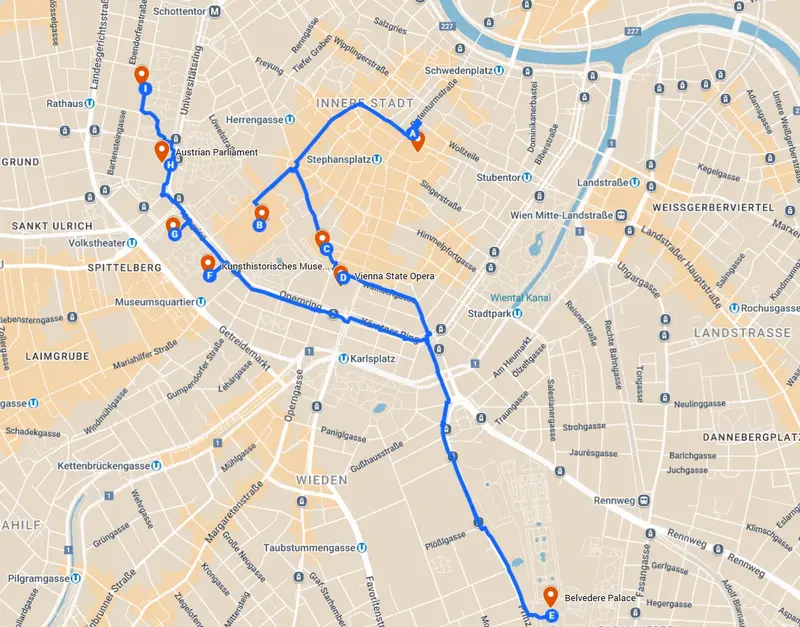
See This Vienna Route on the Map
If you’re looking for a day in Vienna that’s rich in culture, this route is a great way to experience the city’s artistic and historical heart.
It brings together some of Vienna’s most meaningful places — museums filled with masterpieces, iconic buildings, and moments of quiet beauty in between. In this Vienna Travel Guide, I picked these stops to give you a full day that feels inspiring, not overwhelming — perfect if you want more than just a quick walk through the city.
Scout Levi
1. Öfferl (Wollzeile 31)
Start with a proper Viennese breakfast: artisanal breads, great coffee, and a lively morning vibe right by Stephansplatz.
⏰ 20–30 min 🚶 On foot – you’re already here
2. Lobmeyr (Kärntner Straße 26)
A quick design stop at Vienna’s legendary glass & crystal house — perfect for a refined gift or just to admire timeless craftsmanship.
⏰ 15–20 min 🚶 8–10 min walk
3. Demel (Kohlmarkt 14)
Classic pastry break in an iconic confectionery: grab a slice (or two) and enjoy the old-world charm on Kohlmarkt.
⏰ 20–30 min 🚶 8–10 min walk
4. Saint Charles Apotheke (Gumpendorfer Str. 30)
Switch gears with a local wellness favorite — natural cosmetics and a beautiful historic apothecary interior.
⏰ 15–20 min 🚶 12–15 min walk
5. Naschmarkt
Time for tastes and colors: browse spices, cheeses, olives, and fresh produce — or sit down for a simple, tasty lunch.
⏰ 45–60 min 🚶 5–7 min walk
6. Neubaugasse Boutiques (7th District)
Independent fashion, concept stores, and local designers — a relaxed stroll along Vienna’s creative shopping stretch.
⏰ 30–45 min 🚶 12–15 min walk
7. Brunnenmarkt & Yppenplatz
Neighborhood market vibes: multicultural stalls, casual cafés, and a lively square that feels very local.
⏰ 45–60 min 🚋 10–12 min + 🚶 3–5 min
8. Ottakringer Brauerei
End on a true Vienna note: a tour and tasting at the city’s historic brewery — easygoing, authentic, and fun.
⏰ 60–90 min 🚋 10–12 min + 🚶 7–8 min
Local Vienna – Summary
⏱️ Total time: ~7–8 hours (including breaks and two short tram rides)
🚶♂️ Distance: ~7 km (mostly walkable city route)
🛍️ Stops: 8 local highlights: bakeries, design shops, markets (Naschmarkt and Brunnenmarkt), and a brewery

See This Vienna Route on the Map
If you’re after a day in Vienna with true local flavor—food, shops, and markets – this route is for you.
I’ve stitched together a balanced mix: a craft bakery to start, a heritage pastry stop, a design classic, a natural apothecary, two markets (Naschmarkt and Brunnenmarkt), indie boutiques on Neubaugasse, and a brewery to wrap up. The flow is simple and walkable with two short tram hops — no zig-zagging or backtracking — so you can taste, browse, and soak up the neighborhood vibe without rushing.
Scout Levi
1. Stephansdom (St. Stephen’s Cathedral)
The starting point. Vienna’s icon — inside and out. You can climb the South Tower for panoramic views or simply explore the interior.
⏰ 30–45 min 🚶 On foot – you’re already there
2. Graben & Kohlmarkt
Walk Vienna’s most elegant streets. Upscale shops, historical facades, and perfect people-watching spots.
⏰ 30 min + coffee break 🚶 3 min walk
3. Hofburg (Museum Complex – Exterior)
No need to enter — just stroll through the courtyards, admire Michaelerplatz, and maybe catch a glimpse of the Lipizzaner horses.
⏰ 30 min 🚶 5 min walk
4. Volksgarten or Burggarten
Choose one of the nearby gardens — ideal for resting, enjoying a snack, or soaking in the calm atmosphere on a bench.
⏰ 30–45 min 🚶 5–10 min walk
5. MuseumsQuartier (Exterior + Drink)
Perfect if the weather’s nice — chill on the modern benches, grab a drink at Leopold Café, or just enjoy the artsy vibe.
⏰ 45 min – 1 hr 🚶 5 min walk
6. Naschmarkt (Afternoon)
Great for a light meal — local food, international flavors, and a laid-back, colorful market atmosphere.
⏰ 1 hr 🚶 12–15 min walk or 2 metro stops
7. Karlskirche + Break
Admire the baroque church from outside and relax by the fountain. Optional ice cream stop at a nearby kiosk.
⏰ 30 min 🚶 7 min walk
8. Return to Center / Evening Option
End the day with dinner near Hofburg or MuseumsQuartier, depending on your energy.
⏰ Flexible 🚶 everything is close by
Relaxed Vienna Walk – Summary
⏱️ Total time: ~4.5 hours (with breaks)
🚶♂️ Distance: ~5.5 km (easy, mostly flat walk)
🍽️ Stops: 8 key locations, including cafés, parks & landmarks
See This Vienna Route on the Map
If you’re in Vienna for just a day and want to enjoy the city without rushing, this relaxed Vienna walking route (self-guided) is for you.
I put it together to help you see some of the most beautiful spots — from quiet streets and famous landmarks to cozy parks — all at a leisurely pace with time to pause and enjoy. It’s how I’d explore if I wanted to take it slow and soak it all in.
Scout Levi
1. Stephansdom (St. Stephen’s Cathedral)
Start your day in the heart of Vienna at its most iconic cathedral. Explore the interior and admire the Gothic architecture from the bustling square.
⏰ 30–45 min 🚶 You’re already there
2. Graben & Kohlmarkt
Take a short stroll through Vienna’s upscale shopping streets. Elegant storefronts and charming corners make this area perfect for a morning walk.
⏰ 20–30 min 🚶 2–3 min walk
3. Hofburg Palace (Michaelerplatz & Spanish Riding School)
Walk through the grand courtyards of Hofburg, Vienna’s former imperial palace. Glimpse the Spanish Riding School and take in the grandeur of Michaelerplatz.
⏰ 45 min 🚶 2–3 min walk
4. Maria-Theresien-Platz
Between two stunning museums, this elegant square is ideal for photos and a moment of pause. Admire the architecture and central monument.
⏰ 15–20 min 🚶 5 min walk through Hofburg
5. MuseumsQuartier (Quick Exterior Visit)
Take a short break at this lively art hub. Even without going inside, enjoy the modern-meets-classic vibe and perhaps grab a coffee in the courtyard.
⏰ 20–30 min 🚶 2 min walk
6. Schönbrunn Palace (Gardens Only)
Take the U-Bahn to Schönbrunn and explore the vast palace gardens. No need to enter the palace—just soak in the landscape and views.
⏰ 1.5 hrs 🚇 12 min + 🚶 10–12 min
7. Belvedere Palace (Upper Belvedere Grounds)
After Schönbrunn, head toward Belvedere for a quieter stroll through baroque gardens and one of the best panoramic views of Vienna.
⏰ 45–60 min 🚇 12 min + 🚶 12–15 min
8. Karlskirche + Naschmarkt (Evening Walk & Dinner)
End your day with a peaceful visit to Karlskirche followed by dinner at the vibrant Naschmarkt. Great spot for local dishes and relaxed vibes.
⏰ 1.5 hrs 🚶 10–15 min walk
Vienna in One Day – Summary
⏱️ Total time: ~7.5–8 hours (including breaks and transport)
🚶♂️ Distance: ~8 km (easy pace, mix of walking and metro)
🍽️ Stops: 8 must-see spots: cathedrals, palaces, gardens, and a relaxed dinner
See This Vienna Route on the Map
If you want to experience Vienna’s biggest highlights in just one day, this route is the perfect match.
I designed this route in my Vienna Travel Guide to take you through the city’s most iconic landmarks — from grand palaces and historic squares to panoramic gardens and vibrant evening spots. It’s a well-paced route that balances must-see sights with just enough time to enjoy the moment. If I only had one full day in Vienna, this is exactly how I’d do it.
Scout Levi
1. Stephansdom (St. Stephen’s Cathedral)
Begin your cultural walk at Vienna’s most iconic landmark. Explore the magnificent Gothic interior and soak in the atmosphere of the surrounding square.
⏰ 30–45 min 🚶 You’re already there
2. Hofburg Palace (Imperial Library & Spanish Riding School – exterior)
Step into Austria’s imperial past as you walk through Hofburg’s grand courtyards. Don’t miss the façade of the National Library and the Spanish Riding School entrance at Michaelerplatz.
⏰ 45 min 🚶 5 min walk
3. Albertina Museum (Terrace & Exterior)
Take a moment to admire the elegant Albertina building and its panoramic terrace above the Opera. Optional: pop in for world-class graphic arts collections.
⏰ 20–30 min 🚶 5 min walk
4. Vienna State Opera (Wiener Staatsoper)
Even if you’re not attending a performance, the exterior of the Staatsoper is worth a stop. Guided tours are also available inside for those with more time.
⏰ 20–30 min 🚶 2 min walk
5. Belvedere Palace (Upper Belvedere Grounds)
Make your way to the Upper Belvedere for baroque beauty and one of Vienna’s best panoramic views. Optional: visit the museum inside to see Klimt’s The Kiss.
⏰ 1–1.5 hrs 🚋 12 min + 🚶 2 min
6. Kunsthistorisches Museum (Art History Museum)
Return to the city’s museum heart for this architectural and artistic masterpiece. Whether you go inside or just admire the exterior, it’s a highlight of Vienna’s cultural scene.
⏰ 1–1.5 hrs 🚋 12 min + 🚶 2 min
7. Naturhistorisches Museum (Natural History Museum)
Directly opposite Kunsthistorisches, this museum houses fossils, minerals, and a famous dinosaur hall. A great contrast to the art-focused stop before it.
⏰ 1 hr 🚶 2 min walk
8. Parliament & Rathaus (Exterior Walk)
Wrap up your cultural day with Vienna’s most grandiose political buildings. Admire the Greek-style Parliament and the gothic flair of City Hall (Rathaus) just steps away.
⏰ 30–45 min 🚶 5–7 min walk
Cultural Vienna – Summary
⏱️ Total time: ~7.5–8 hours (including breaks and short tram rides)
🚶♂️ Distance: ~7.5 km (moderate pace, mostly walkable with one tram connection)
🖼️ Stops: 8 cultural landmarks: museums, historic buildings, and imperial icons
See This Vienna Route on the Map
If you’re looking for a day in Vienna that’s rich in culture, this route is a great way to experience the city’s artistic and historical heart.
It brings together some of Vienna’s most meaningful places — museums filled with masterpieces, iconic buildings, and moments of quiet beauty in between. In this Vienna Travel Guide, I picked these stops to give you a full day that feels inspiring, not overwhelming — perfect if you want more than just a quick walk through the city.
Scout Levi
1. Öfferl (Wollzeile 31)
Start with a proper Viennese breakfast: artisanal breads, great coffee, and a lively morning vibe right by Stephansplatz.
⏰ 20–30 min 🚶 On foot – you’re already here
2. Lobmeyr (Kärntner Straße 26)
A quick design stop at Vienna’s legendary glass & crystal house — perfect for a refined gift or just to admire timeless craftsmanship.
⏰ 15–20 min 🚶 8–10 min walk
3. Demel (Kohlmarkt 14)
Classic pastry break in an iconic confectionery: grab a slice (or two) and enjoy the old-world charm on Kohlmarkt.
⏰ 20–30 min 🚶 8–10 min walk
4. Saint Charles Apotheke (Gumpendorfer Str. 30)
Switch gears with a local wellness favorite — natural cosmetics and a beautiful historic apothecary interior.
⏰ 15–20 min 🚶 12–15 min walk
5. Naschmarkt
Time for tastes and colors: browse spices, cheeses, olives, and fresh produce — or sit down for a simple, tasty lunch.
⏰ 45–60 min 🚶 5–7 min walk
6. Neubaugasse Boutiques (7th District)
Independent fashion, concept stores, and local designers — a relaxed stroll along Vienna’s creative shopping stretch.
⏰ 30–45 min 🚶 12–15 min walk
7. Brunnenmarkt & Yppenplatz
Neighborhood market vibes: multicultural stalls, casual cafés, and a lively square that feels very local.
⏰ 45–60 min 🚋 10–12 min + 🚶 3–5 min
8. Ottakringer Brauerei
End on a true Vienna note: a tour and tasting at the city’s historic brewery — easygoing, authentic, and fun.
⏰ 60–90 min 🚋 10–12 min + 🚶 7–8 min
Local Vienna – Summary
⏱️ Total time: ~7–8 hours (including breaks and two short tram rides)
🚶♂️ Distance: ~7 km (mostly walkable city route)
🛍️ Stops: 8 local highlights: bakeries, design shops, markets (Naschmarkt and Brunnenmarkt), and a brewery
See This Vienna Route on the Map
If you’re after a day in Vienna with true local flavor—food, shops, and markets – this route is for you.
I’ve stitched together a balanced mix: a craft bakery to start, a heritage pastry stop, a design classic, a natural apothecary, two markets (Naschmarkt and Brunnenmarkt), indie boutiques on Neubaugasse, and a brewery to wrap up. The flow is simple and walkable with two short tram hops — no zig-zagging or backtracking — so you can taste, browse, and soak up the neighborhood vibe without rushing.
Scout Levi
Best Photo Spots in Vienna
If you’re hunting for the best photo spots in Vienna, this photo guide points you to Instagrammable places locals love—easy to find, great light, clean backgrounds.
A rooftop photo from St. Stephen’s Cathedral in Vienna, featuring the colorful patterned roof tiles and sweeping Old Town skyline—best shot in soft morning or late-afternoon light.
A photo of the Upper Belvedere Palace in Vienna with its baroque gardens and reflecting pools, capturing the symmetry and grandeur of one of the city’s most iconic landmarks—especially beautiful at golden hour.
A scenic view from the Gloriette in Schönbrunn Palace gardens, overlooking the palace, formal baroque gardens, and Vienna’s skyline in the distance — best captured in the morning for fewer crowds or at sunset for dramatic light.
A photo of Karlskirche (St. Charles Church) in Vienna reflected in the front pool, highlighting the baroque facade and symmetry—especially striking at golden hour or blue hour.
A vibrant photo of Hundertwasserhaus in Vienna, famous for its colorful, wavy façade with irregular windows and greenery spilling from balconies — an iconic architectural landmark that looks like a living mural.
Wiener Riesenrad (Vienna Ferris Wheel) in Prater—historic landmark with vintage red cabins, sweeping city views, and a timeless photo spot day or night.
A view of the Palmenhaus in Vienna’s Burggarten, a Jugendstil glasshouse with tropical plants and a café; its elegant façade and terrace make a photogenic stop near the Hofburg.
Vienna’s Volksgarten with blooming rose gardens and the elegant white Theseus Temple — a romantic photo spot in the heart of the city.
The Kunsthistorisches Museum in Vienna, framed by fountains and Maria-Theresien-Platz, is one of the city’s most photogenic landmarks, especially at sunset.


St. Stephen’s Cathedral – Rooftop Views
Mosaic roof tiles and sweeping Old Town panoramas — a classic Vienna photo spot. Best time: early morning or late afternoon for soft light.
Belvedere Palace – Upper Belvedere & Reflecting Pools
Baroque symmetry with mirror-like water for postcard-perfect shots. Best time: golden hour; stand centered for a balanced frame.
Schönbrunn – Gloriette Viewpoint
Shoot from the Gloriette down toward the palace and skyline. Best time: morning (fewer crowds) or sunset silhouettes.
Karlskirche – Reflection Pool
The church reflected in the front pool gives a strong, clean composition. Best time: late afternoon to blue hour; go wide for the full façade.
Hundertwasserhaus
Colorful, wavy façades with no straight lines — like a living mural. Tip: cross the street for a fuller view; avoid doorways (it’s residential).
Palmenhaus (Burggarten)
Glasshouse café with an “urban jungle” vibe in the city center. Best time: daytime for bright greenery; shoot inside for lush textures.
Prater – Wiener Riesenrad (Ferris Wheel)
Vienna’s vintage Ferris wheel — great at night with lights or from inside a cabin. Best time: sunset into evening for motion and glow.
Volksgarten – Rose Garden & Theseus Temple
Romantic rose alleys and a photogenic white temple for clean, symmetric frames. Best time: late spring/summer bloom; use a low angle for leading lines.
Kunsthistorisches Museum – Maria-Theresien-Platz Fountain
Monumental neo-Renaissance façade framed by baroque fountains and the Maria Theresa Monument — especially photogenic at golden hour and into blue hour.
Vienna Art, Culture & Events Scene
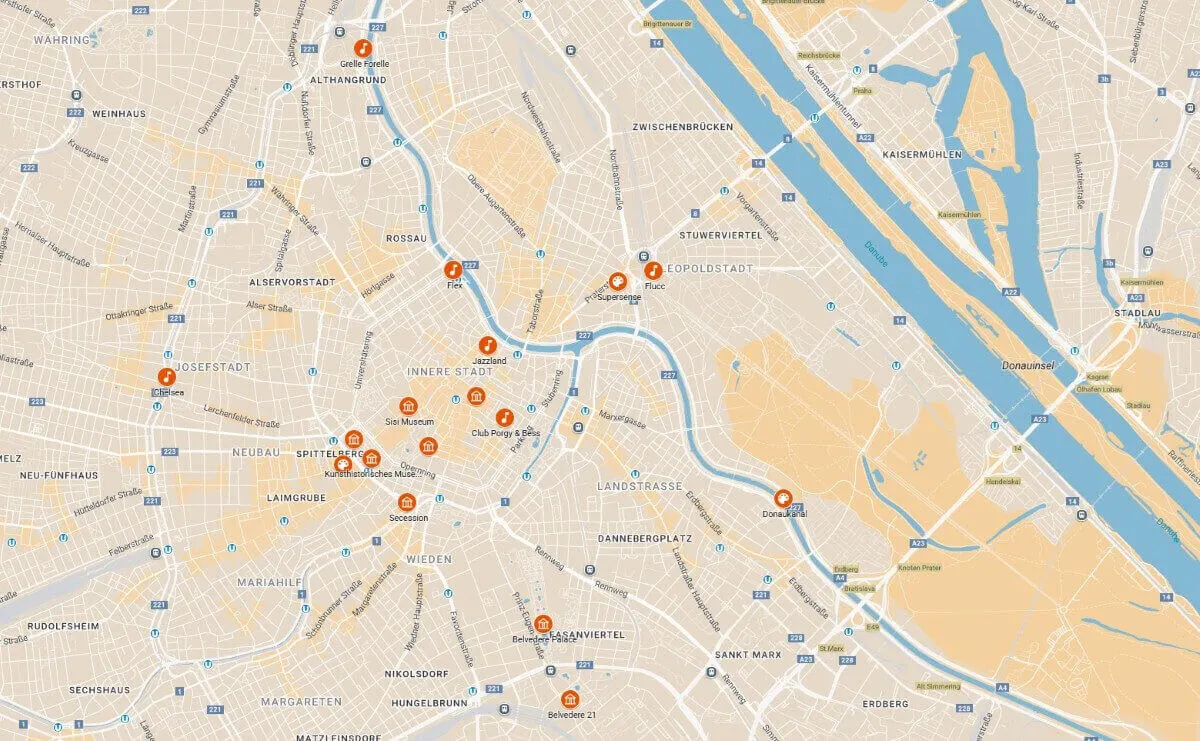
A quick guide to Vienna’s art and culture — iconic museums, indie spaces, and festivals that shape the city’s rhythm. Explore the highlights below and open our cultural map when you’re ready.
Must-See Museums & Venues
Kunsthistorisches Museum (KHM)
Vienna’s grand art history museum with Old Masters, Egyptian and Greek antiquities, and imperial treasures. Ticket required.
Naturhistorisches Museum (NHM)
Opposite KHM, Vienna’s natural history gem — dinosaur skeletons, meteorites, and global collections. Ticket required.
Albertina
Famous for graphic arts and drawings, plus Monet to Picasso; also strong temporary exhibitions. Ticket required.
Belvedere Palace
Baroque palaces with Klimt’s The Kiss, Austrian masters, and beautiful gardens. Ticket required.
Hofburg & Sisi Museum
Former Habsburg winter residence; imperial apartments, crown jewels, and the Spanish Riding School. Ticket required.
St. Stephen’s Cathedral
Gothic landmark in Vienna’s center — climb the South Tower for panoramic city views. Free entry; tickets for tower & catacombs.
MuseumsQuartier (MQ)
Courtyards, contemporary museums (Leopold, MUMOK), and pop-up culture events; great in the evening. Admission varies.
Secession (Wiener Secession)
Iconic golden dome and Klimt’s Beethoven Frieze; rotating exhibitions of modern art. Ticket required.
Belvedere 21
Sleek 21st-century art space south of Belvedere; clean lines and strong exhibitions. Ticket required.
Vienna Street Art & Indie Spaces
From riverside graffiti to hidden passages and creative indie hubs, Vienna’s street art scene adds bold color to the city’s cultural landscape.
Donaukanal Murals
Colorful riverside walls covered in rotating street art; best explored on foot or bike, especially in the late afternoon.
MQ Passage
Small artistic interventions and light installations hidden in the passages of the MuseumsQuartier courtyards.
SUPERSENSE (Dogenhof)
Indie hub in a historic hall — analog photography, vinyl recordings, and intimate exhibitions in a unique setting.
Vienna’s Annual Festivals
Each year Vienna comes alive with open-air concerts, film screenings, and cultural celebrations that locals and visitors plan their trips around.
Wiener Festwochen
City-wide theatre and performance festival featuring drama, opera, and experimental productions across Vienna.
🎭 May – June
ImPulsTanz
Europe’s largest contemporary dance festival with workshops, performances, and international guest choreographers.
💃 July – August
Rathausplatz Film Festival
Open-air screenings of opera, concerts, and cultural performances with Vienna’s City Hall as a backdrop.
🎶 July – August
Donauinselfest
Europe’s biggest free open-air music festival with rock, pop, indie, and local acts across multiple stages on the Danube Island.
🎶 June
Viennale
International film festival showcasing arthouse, independent, and global cinema premieres across Vienna’s historic cinemas.
🎬 October – November
MQ Winter
Light art installations, live performances, and cozy courtyard happenings at MuseumsQuartier during winter season.
❄️ November – December
Vienna Live Music & Nightlife
From vaulted jazz cellars to riverside electronic clubs, Vienna’s nightlife offers live music and late-night energy for every taste.
Porgy & Bess
Vienna’s top jazz club — nightly program of contemporary and international acts in an intimate seated setting.
Jazzland
Classic vaulted cellar near the canal; Vienna’s oldest jazz club with local and international performers.
Grelle Forelle
Late-night electronic club by the Danube Canal; minimal, sound-first atmosphere, no photos inside.
Fluc
Indie and electro hub at Praterstern with upstairs lounge and basement dance floor.
Chelsea
Laid-back club under the Gürtel arches; indie, rock, and football screenings alongside live gigs.
Flex
Legendary riverside club with powerful sound system — drum & bass, techno, and alternative nights.
Explore all Vienna art, culture & event spots on one map — save it for your trip.
Famous Quotes About Vienna
Countless great minds, artists, and visionaries have lived, worked, or found inspiration in Vienna. Here are just a few of their words that capture the city’s unique spirit.

Ludwig van Beethoven
“Vienna is the city of music; here alone can one create as I do.”
(letters from Vienna, c. 1800)

Mark Twain
“When one lives in Vienna, he knows what happiness means.”
(travel writings, late 19th century)

Sigmund Freud
“In Vienna, my roots and memories remain — the city shaped my mind and work.”
(interviews, 1930s)
Vienna Travel Guide: Frequently Asked Questions
Is Vienna walkable?
Absolutely — Vienna is very walkable. The historic center (Innere Stadt) is compact and easy to explore on foot. Most major landmarks are within walking distance, and for longer trips you can always hop on the tram or U-Bahn.
How do I get around Vienna?
Here’s how to get around Vienna: the city has one of the most reliable public transport systems in Europe. The U-Bahn (subway), trams, and buses run frequently and connect every part of the city. If you plan to explore a lot, get a Vienna public transport pass (24-hour, 48-hour, or 72-hour) — these passes give you unlimited rides and are the most convenient option. For longer stays, weekly passes are also available.
Taxis and ride-hailing apps are easy to find but more expensive, so most travelers rely on public transport. If you’re staying near the city center, you’ll probably walk a lot — most landmarks are within walking distance.
For something different, try the Ring Tram, which circles the historic center and passes many of Vienna’s top sights. In warmer months, boat rides on the Danube are also a fun way to see the city from another angle.
When is the best time to visit Vienna?
The best time to visit Vienna depends on what you enjoy most. Spring and autumn are perfect for strolling through parks, summer brings festivals and open-air concerts, while winter is magical with Christmas markets and ice skating at Rathausplatz.
How many days should I spend in Vienna?
Most travelers find that spending 2–3 days in Vienna is enough to see the main highlights and soak up the city’s atmosphere. If you have 4–5 days, you can slow down, explore hidden corners, or take short trips nearby. For more tips on how to make the most of your time, explore the Vienna Travel Guide.
What are the must-see attractions in Vienna?
The must-see attractions in Vienna include Schönbrunn Palace, Belvedere, the Hofburg, and St. Stephen’s Cathedral. For the full Viennese experience, add a stroll along the Ringstraße and time in a traditional coffeehouse.
Is Vienna safe for tourists?
Vienna is considered very safe for tourists and is often ranked among the safest cities in Europe. Basic precautions are enough — just keep an eye on your belongings in crowded areas and on public transport.
What are the best neighborhoods to stay in Vienna?
The best areas to stay in Vienna depend on what you’re looking for — from central landmarks to local vibes and green escapes. For first-timers, Innere Stadt (1st district) is perfect — close to all the major sights. For a modern, creative vibe, try Neubau (7th district). If you want more green spaces and a quieter atmosphere, Prater or the Danube area are great options.
What can I do in Vienna on a rainy day?
Vienna has plenty of indoor attractions: Kunsthistorisches Museum, Albertina, Mozarthaus, or touring the Hofburg. For a cozy experience, spend time in a traditional coffeehouse while the city carries on outside.
What are the best free things to do in Vienna?
There are plenty of free things to do in Vienna if you know where to look. Here are some of the most popular:
- St. Stephen’s Cathedral: Free entry to the main church (tower and catacombs require a ticket).
- Belvedere Gardens: Stroll through baroque gardens with stunning city views — no ticket needed.
- MuseumsQuartier courtyards: Relax in the open-air spaces surrounded by contemporary art museums.
- Ringstrasse walk: See Vienna’s grand boulevard with landmarks like the Opera, Parliament, and Rathaus.
- City parks: Enjoy Volksgarten roses or the vast Prater park, home to the famous Giant Ferris Wheel (rides cost, but walking is free).
- Free concerts & events: In summer, catch film screenings and classical concerts at Rathausplatz.
What day trips can I take from Vienna?
Looking for a day trips from Vienna? Vienna is a perfect base for popular day trips — from the Wachau Valley with its vineyards and river views, to the historic city of Bratislava just an hour away, and cultural gems like Salzburg and Hallstatt. For a nature escape, head to Kahlenberg hill or the Vienna Woods for hiking and panoramic views.
Is Vienna expensive to visit?
Vienna can be expensive to visit if you only stick to luxury hotels and fine dining, but it doesn’t have to break the bank. Public transport is affordable, museums often offer student discounts, and the Vienna City Card helps cut costs. For food, you’ll find everything from budget-friendly street snacks like Käsekrainer to high-end restaurants.
Is Vienna good for families with kids?
Vienna with kids is a great choice — the Prater amusement park, Schönbrunn Zoo, and the Museum of Illusions are always favorites. In summer, children love the pools and beaches along the Alte Donau.
When do the Christmas markets in Vienna take place?
The Christmas markets in Vienna are among the most famous in Europe, offering an unforgettable holiday atmosphere with twinkling lights, handcrafted gifts, mulled wine, and seasonal treats. They usually open in mid-November and run until December 24, with some continuing into early January. Exploring the Christmas markets in Vienna is a magical way to experience the city’s festive spirit in the heart of winter.
Why is Vienna classical music world-famous?
Vienna classical music is world-famous because the city was home to legendary composers like Mozart, Beethoven, and Strauss, and it continues to celebrate their legacy today. From the Vienna State Opera and Musikverein to intimate palace concerts, Vienna classical music offers unforgettable performances for every visitor. Experiencing Vienna classical music is one of the highlights of any trip to the Austrian capital.
Absolutely — Vienna is very walkable. The historic center (Innere Stadt) is compact and easy to explore on foot. Most major landmarks are within walking distance, and for longer trips you can always hop on the tram or U-Bahn.
Here’s how to get around Vienna: the city has one of the most reliable public transport systems in Europe. The U-Bahn (subway), trams, and buses run frequently and connect every part of the city. If you plan to explore a lot, get a Vienna public transport pass (24-hour, 48-hour, or 72-hour) — these passes give you unlimited rides and are the most convenient option. For longer stays, weekly passes are also available.
Taxis and ride-hailing apps are easy to find but more expensive, so most travelers rely on public transport. If you’re staying near the city center, you’ll probably walk a lot — most landmarks are within walking distance.
For something different, try the Ring Tram, which circles the historic center and passes many of Vienna’s top sights. In warmer months, boat rides on the Danube are also a fun way to see the city from another angle.
The best time to visit Vienna depends on what you enjoy most. Spring and autumn are perfect for strolling through parks, summer brings festivals and open-air concerts, while winter is magical with Christmas markets and ice skating at Rathausplatz.
Most travelers find that spending 2–3 days in Vienna is enough to see the main highlights and soak up the city’s atmosphere. If you have 4–5 days, you can slow down, explore hidden corners, or take short trips nearby. For more tips on how to make the most of your time, explore the Vienna Travel Guide.
The must-see attractions in Vienna include Schönbrunn Palace, Belvedere, the Hofburg, and St. Stephen’s Cathedral. For the full Viennese experience, add a stroll along the Ringstraße and time in a traditional coffeehouse.
Vienna is considered very safe for tourists and is often ranked among the safest cities in Europe. Basic precautions are enough — just keep an eye on your belongings in crowded areas and on public transport.
The best areas to stay in Vienna depend on what you’re looking for — from central landmarks to local vibes and green escapes. For first-timers, Innere Stadt (1st district) is perfect — close to all the major sights. For a modern, creative vibe, try Neubau (7th district). If you want more green spaces and a quieter atmosphere, Prater or the Danube area are great options.
Vienna has plenty of indoor attractions: Kunsthistorisches Museum, Albertina, Mozarthaus, or touring the Hofburg. For a cozy experience, spend time in a traditional coffeehouse while the city carries on outside.
There are plenty of free things to do in Vienna if you know where to look. Here are some of the most popular:
- St. Stephen’s Cathedral: Free entry to the main church (tower and catacombs require a ticket).
- Belvedere Gardens: Stroll through baroque gardens with stunning city views — no ticket needed.
- MuseumsQuartier courtyards: Relax in the open-air spaces surrounded by contemporary art museums.
- Ringstrasse walk: See Vienna’s grand boulevard with landmarks like the Opera, Parliament, and Rathaus.
- City parks: Enjoy Volksgarten roses or the vast Prater park, home to the famous Giant Ferris Wheel (rides cost, but walking is free).
- Free concerts & events: In summer, catch film screenings and classical concerts at Rathausplatz.
Looking for a day trips from Vienna? Vienna is a perfect base for popular day trips — from the Wachau Valley with its vineyards and river views, to the historic city of Bratislava just an hour away, and cultural gems like Salzburg and Hallstatt. For a nature escape, head to Kahlenberg hill or the Vienna Woods for hiking and panoramic views.
Vienna can be expensive to visit if you only stick to luxury hotels and fine dining, but it doesn’t have to break the bank. Public transport is affordable, museums often offer student discounts, and the Vienna City Card helps cut costs. For food, you’ll find everything from budget-friendly street snacks like Käsekrainer to high-end restaurants.
Vienna with kids is a great choice — the Prater amusement park, Schönbrunn Zoo, and the Museum of Illusions are always favorites. In summer, children love the pools and beaches along the Alte Donau.
The Christmas markets in Vienna are among the most famous in Europe, offering an unforgettable holiday atmosphere with twinkling lights, handcrafted gifts, mulled wine, and seasonal treats. They usually open in mid-November and run until December 24, with some continuing into early January. Exploring the Christmas markets in Vienna is a magical way to experience the city’s festive spirit in the heart of winter.
Vienna classical music is world-famous because the city was home to legendary composers like Mozart, Beethoven, and Strauss, and it continues to celebrate their legacy today. From the Vienna State Opera and Musikverein to intimate palace concerts, Vienna classical music offers unforgettable performances for every visitor. Experiencing Vienna classical music is one of the highlights of any trip to the Austrian capital.
Vienna Travel Tips & Insights
What’s the best way to see Vienna’s highlights quickly?
Walk or hop on the tram along the Ringstraße — in one loop you’ll pass the Opera, Hofburg, Parliament, and Rathaus. It’s the fastest way to get a feel for the city’s grandeur.
Why are Vienna’s coffeehouses so special?
They’re more than cafés — they’re a cultural institution. Order a Wiener Melange and cake, linger for hours with a book or simply people-watch. No rush, no pressure — that’s the Viennese way.
Which hidden spots are worth seeking out?
-
Jesuitenkirche looks modest from the outside but stuns with its ornate interior.
-
Ferstel Passage is a charming arcade with cafés and boutiques that many visitors overlook.
Can I enjoy the opera without spending much?
Yes! Standing tickets for the Wiener Staatsoper cost just a few euros. You may stand the whole evening, but the music and atmosphere are exactly the same as in the expensive seats.
What are the best tips for enjoying Vienna classical music?
To get the best out of Vienna classical music, keep these insider tips in mind:
- Dress code: Smart-casual works for most concerts — only special events like the New Year’s Concert call for formal attire.
- Venues: For a unique setting, try palace concerts at Schönbrunn or Kursalon, where the mood is elegant yet relaxed.
- Budget tickets: Standing-room options at the Vienna State Opera or Musikverein cost just a few euros and still deliver the full experience.
- Fun twist: Some tourist-friendly Vienna classical music shows include musicians in 18th-century costumes — playful but memorable.
During peak seasons, always book early to secure a seat — demand for Vienna classical music events is high, especially in December and May.
Where can I experience real Viennese evenings?
Head to a heuriger in the wine-growing districts of Grinzing or Heiligenstadt. Here you’ll find local wine, simple homemade dishes, and a cozy, authentic vibe far from the city bustle.
What to do in summer by the water?
For a laid-back atmosphere with drinks and deckchairs, go to Strandbar Herrmann by the Danube Canal. If you prefer swimming or renting a boat, the Alte Donau lake is the perfect summer escape.
What seasonal events make Vienna special?
- Summer: Free open-air concerts and the Film Festival at Rathausplatz.
- Winter: Magical Christmas markets and ice skating in front of City Hall.
- Spring & Autumn: Perfect for strolling through parks and visiting nearby vineyards.
These seasonal highlights show why Vienna is worth visiting year-round — from free summer concerts to the famous Christmas markets in Vienna. For more on seasonal events and tips, see the Vienna Travel Guide.
Can I visit museums in a different way?
Yes — during Lange Nacht der Museen (Long Night of Museums) and other special events, museums stay open late and offer a completely different atmosphere compared to daytime visits.
Where can I slow down and relax outdoors?
-
Stadtpark is perfect for a picnic and photos with the golden Strauss statue.
-
Burggarten offers green lawns right next to the Hofburg — a quiet escape in the middle of the city.