Plan quickly, explore deeply, relax completely!


Dresden Travel Guide: Key Info & Navigation
Core Facts
- City Name: Dresden (Dresden)
- Region: Saxony, Germany
- Population: ~560,000
- Time Zone: CET (UTC +1), CEST (UTC +2 summer)
- Emergency Number: 112
- Main Train Station: Dresden Hauptbahnhof
- Airport: Dresden International Airport (DRS)
- Public Transportation: Trams, Buses, Regional Trains, Taxis
- UNESCO Site: Elbe Valley (former, cultural landscape)
- Best Time to Visit: May to September
Nice to Know
- Famous For: Baroque architecture, art museums, riverfront views, and Christmas markets
- Must-See: Zwinger Palace, Frauenkirche, Semperoper, and Brühl’s Terrace
- Local Dish: Saxon Sauerbraten (marinated roast), Dresdner Stollen, and potato soup
- Wine Culture: Saxon Wine Route and local vineyards along the Elbe Valley
- Porcelain Heritage: World-famous Meissen porcelain crafted near Dresden
- Fun Fact: Nicknamed “Florence on the Elbe”
- Avg Budget: €70–€110/day
- Safety Rating: Very Safe
- Internet Speed: 70–100 Mbps
Today in Dresden
On This Page
Explore Dresden: Search, Filter & Find Top Spots

What is Lorem Ipsum? Lorem Ipsum is simply dummy text of the printing and typesetting industry....
-
Scout Levi

What is Lorem Ipsum? Lorem Ipsum is simply dummy text of the printing and typesetting industry....
-

What is Lorem Ipsum? Lorem Ipsum is simply dummy text of the printing and typesetting industry....
-
Must-See Places in Dresden
Wondering what makes Dresden unforgettable? Step into a city of royal courts, baroque palaces, and Elbe-side walks filled with art, light, and life—both grand and intimate at once.
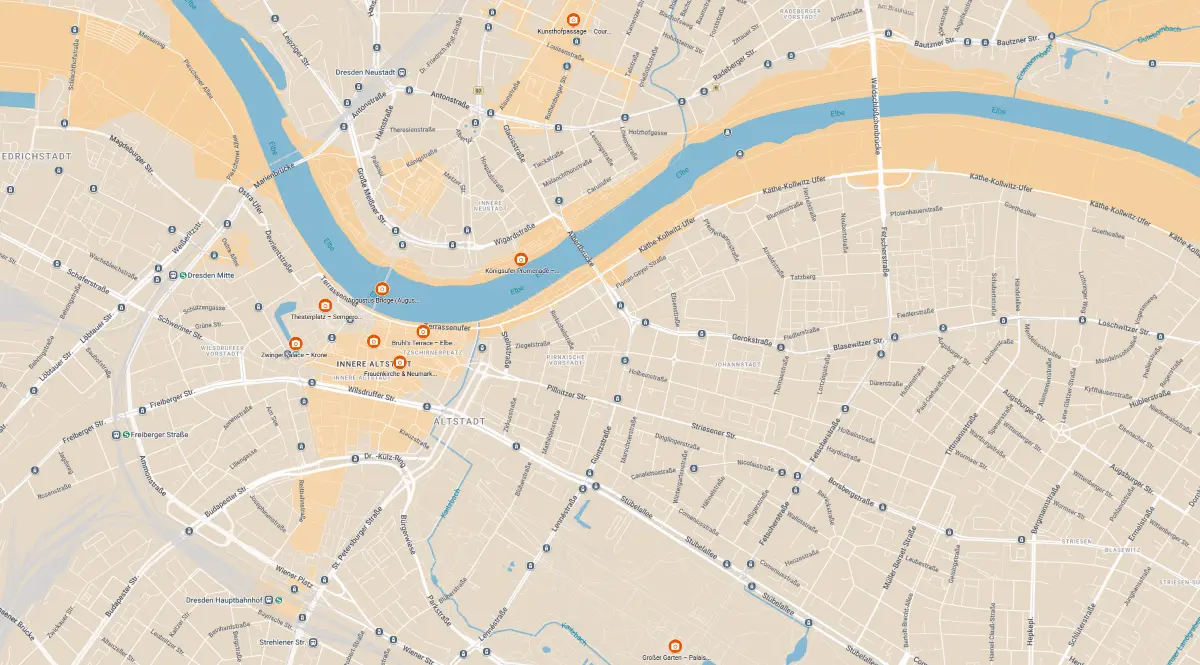
Use the map above to explore the most inspiring Dresden attractions. Each pin opens a window into history, creativity, and local charm. Then scroll down to see our handpicked best places to visit in Dresden—all part of this Dresden Travel Guide, built to help you plan without overplanning.
Dresden Neighborhoods to Explore
Not sure where to stay in Dresden? Our Dresden neighborhoods guide helps you find the perfect place to stay — from the elegance of the Old Town and the creative pulse of Neustadt to peaceful riverside corners and leafy districts full of local charm.

📌Old Town (Altstadt)
Dresden’s historic heart — baroque landmarks, grand squares, and world-class museums that reveal the city’s royal past and artistic soul.
📌New Town (Neustadt)
Creative and bohemian — filled with street art, indie cafés, and vibrant nightlife that capture Dresden’s modern, free-spirited vibe.
📌Blasewitz
Elegant and tranquil — riverside villas, leafy avenues, and the iconic Blue Wonder bridge make this district perfect for peaceful strolls.
📌Loschwitz
A charming hillside escape — panoramic views, art studios, and historic funiculars create a romantic setting above the Elbe River.
📌Striesen
Calm and local — family-friendly cafés, green parks, and cozy bakeries give this neighborhood an authentic Dresden feel.
📌Leipziger Vorstadt
Urban and evolving — a lively mix of converted warehouses, creative hubs, and trendy bars shaping Dresden’s contemporary scene.
AnyWayTale’s Dresden Itinerary Picks
Build your Dresden itinerary (1–3 days) to explore baroque splendor, artistic treasures, and scenic Elbe views — all at your own rhythm.
1. Altmarkt Square
Begin your walk at Altmarkt, the heart of Dresden’s old town. The square is lined with cafés and shops — perfect for a coffee or light breakfast before you start exploring. In winter, it transforms into the Striezelmarkt, one of Europe’s oldest and most charming Christmas markets.
⏰ 20–30 min 🚶 Starting point
2. Kreuzkirche (Church of the Holy Cross)
Just beside Altmarkt, the Kreuzkirche stands as a symbol of Dresden’s postwar resilience. Climb its tower for a panoramic view of the old town and the Elbe River. It’s a short but rewarding detour before heading toward the castle area.
⏰ 15–20 min 🚶 2–3 min from Altmarkt
3. Dresden Castle (Residenzschloss)
Continue north to the Residenzschloss, once home to Saxon kings. The castle courtyard is free to enter and offers a glimpse of baroque architecture at its finest. Take a short break here for photos or a nearby café stop.
⏰ 20–25 min 🚶 6–7 min from Kreuzkirche
4. Fürstenzug (Procession of Princes)
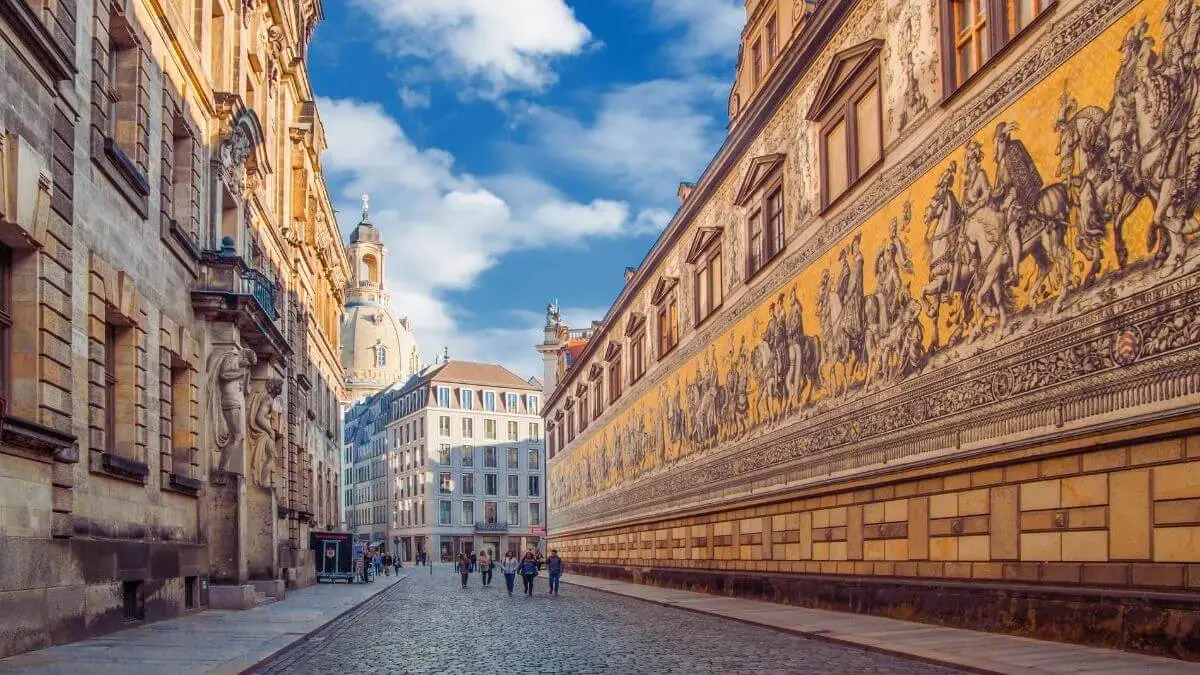
Leaving the castle, follow the Fürstenzug — a 102-meter mural made of 24,000 Meissen porcelain tiles depicting Saxon rulers through the centuries. It’s one of Dresden’s most striking and photogenic landmarks.
⏰ 10–15 min 🚶 2–3 min from the Castle
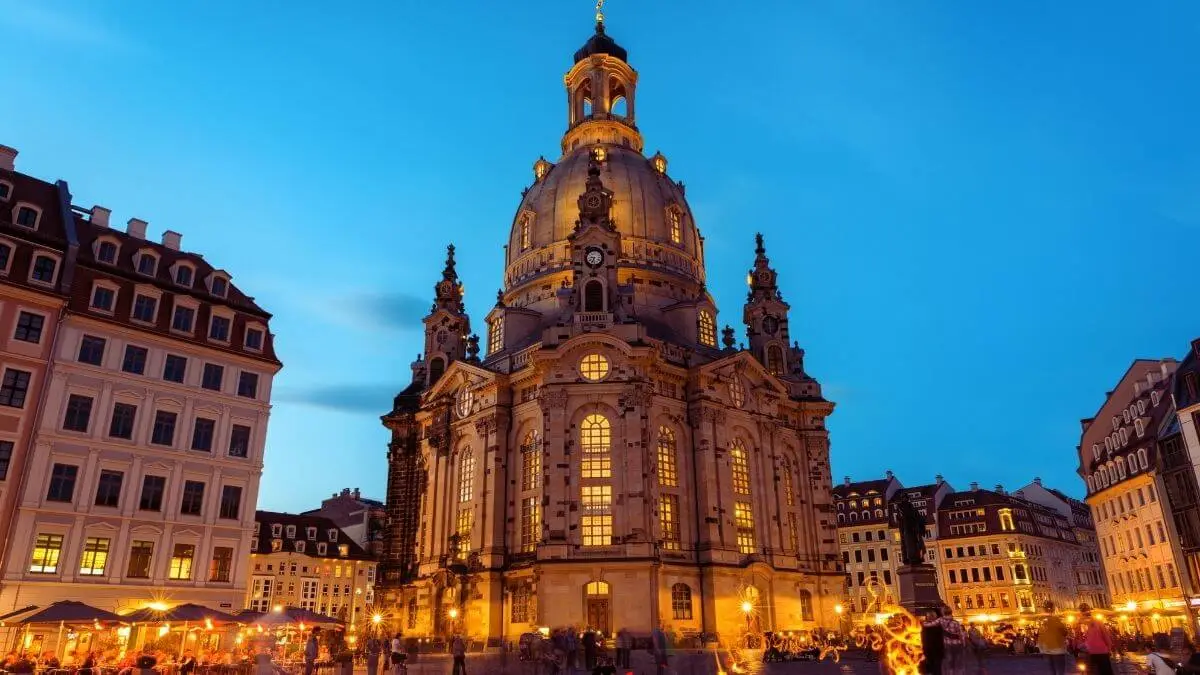
5. Frauenkirche (Church of Our Lady)
Just ahead lies the magnificent Frauenkirche, rebuilt stone by stone after WWII. Step inside for a quiet moment, or climb up to the dome viewpoint for breathtaking city panoramas. Around Neumarkt Square, you’ll find plenty of cafés and restaurants for a relaxed lunch or pastry stop.
⏰ 30–45 min 🚶 4–5 min from Fürstenzug
6. Brühl’s Terrace
Walk toward the river and finish this stretch on Brühl’s Terrace, known as the “Balcony of Europe.” Enjoy the Elbe views and watch local street musicians perform. It’s the perfect spot for an afternoon drink or ice cream before continuing west along the riverbank.
⏰ 30–40 min 🚶 3–4 min from Frauenkirche
7. Theaterplatz
Head west along the riverbank to reach Theaterplatz, the grand square connecting Dresden’s major landmarks. From here, admire the views of the Semperoper and the Zwinger. It’s a pleasant place for a coffee or photo break before the final stops.
⏰ 15–20 min 🚶 7–8 min from Brühl’s Terrace
8. Semperoper (Opera House)
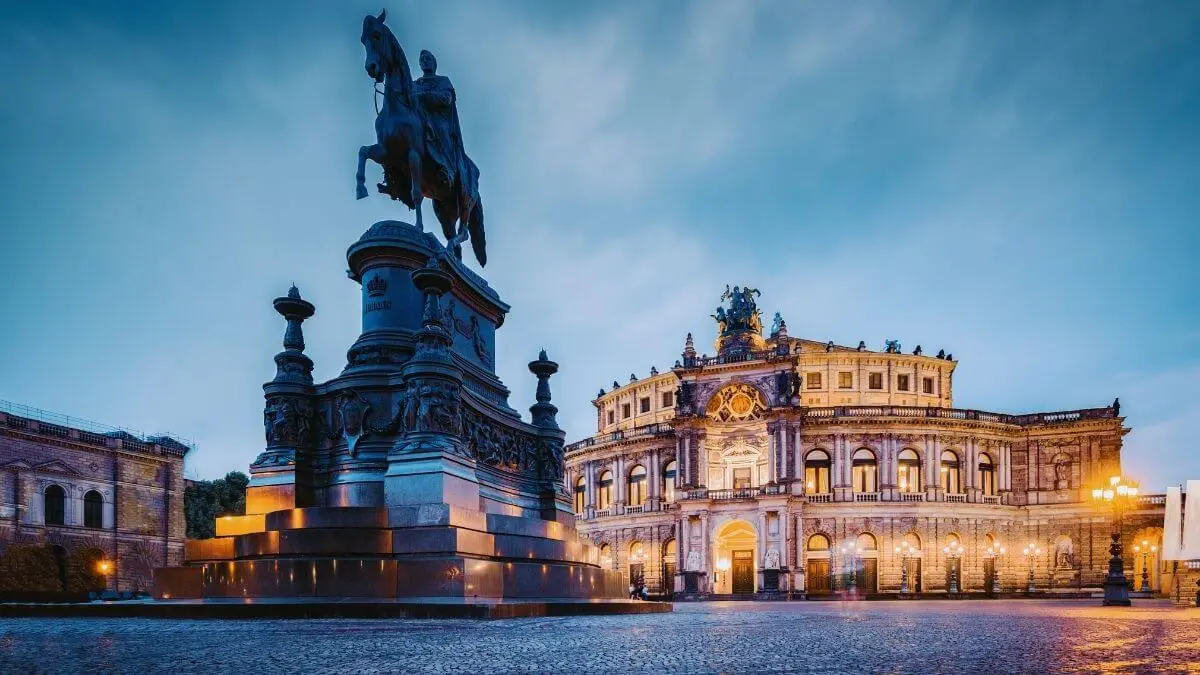
Right on Theaterplatz stands the elegant Semperoper, one of Europe’s finest opera houses and the site of Wagner’s premieres. Take in its architectural beauty or join a short guided tour if time allows.
⏰ 15–20 min 🚶 Within the square
9. Zwinger Palace — Grand Finale
End your route at the Zwinger Palace, Dresden’s baroque masterpiece. Wander through its courtyards and fountains, or visit the Old Masters Gallery if you have time. Nearby cafés and beer gardens make it the ideal place to unwind and reflect on your walk through Dresden.
⏰ 30–45 min 🚶 3–5 min from Semperoper
Dresden Highlights Walking Route – Summary
⏱️ Total time: ~3 hours (without museum visits)🚶♀️ Distance: ~3.2 km (easy, circular route through Altstadt)
🍽️ Stops: 9 key locations with cafés, river views & baroque landmarks

If you’re visiting Dresden for a day and want to experience the city’s highlights without rushing or backtracking, this walking route is the one I recommend.
I designed it to follow a smooth, circular flow through the old town — starting at Altmarkt and the Kreuzkirche, then passing Dresden Castle, the Fürstenzug, and Frauenkirche, before curving along the Elbe to Brühl’s Terrace, Theaterplatz, and the Zwinger Palace. It captures the essence of Dresden — its baroque charm, riverside calm, and timeless spirit. Along the way, there are relaxed pauses for coffee, lunch, or an afternoon drink, so you can enjoy the city entirely at your own pace. 1. Zwinger Palace – Old Masters Gallery
Begin at the Zwinger Palace, Dresden’s baroque crown jewel. Inside, you’ll find the Old Masters Picture Gallery featuring masterpieces by Raphael, Rembrandt, and Vermeer. The courtyards and fountains alone are worth a stroll. Start early to enjoy the calm atmosphere and grab a coffee at the café pavilion inside the complex.
⏰ 60–75 min 🚶 Starting point
2. Mathematics and Physics Salon
Within the same Zwinger complex, step into the Mathematics and Physics Salon, one of Europe’s oldest museums of science. Explore antique globes, telescopes, and mechanical instruments that bridge art and science from the 16th to 19th centuries.
Tip: Before leaving Zwinger, take a short break for a pastry or drink at the inner courtyard café.
⏰ 30–40 min 🚶 Within Zwinger complex
3. Dresden Castle – Green Vault & Armory
Continue a few minutes east to the Residenzschloss, once home to Saxon kings. Inside, explore the dazzling Green Vault and the Armory collections — an unmatched display of royal treasures, gems, and historic weaponry. Even the castle courtyard’s restored architecture feels like an open-air gallery.
Note: You’ll find several cafés nearby along Schloßstraße — ideal for a short espresso stop before continuing.
⏰ 60–75 min 🚶 3–4 min from Zwinger
4. Dresden Cathedral (Hofkirche)
Right next to the castle, admire the Dresden Cathedral, one of the city’s great baroque landmarks. Its ornate façade and serene interior reflect both grandeur and resilience. Step inside to see the royal tombs or simply enjoy the quiet atmosphere.
⏰ 20–25 min 🚶 2 min from Castle
5. Fürstenzug (Procession of Princes)
As you leave the cathedral area, follow the Fürstenzug — a 102-meter mural made of 24,000 Meissen porcelain tiles. It depicts Saxon rulers through the centuries and stands as one of the largest porcelain artworks in the world. It’s a perfect spot for photos on your way to Neumarkt Square.
Tip: Several street cafés nearby offer a nice opportunity for a refreshing drink before you continue to the museums ahead.
⏰ 15–20 min 🚶 3–4 min from Cathedral
6. Dresden Transport Museum (Verkehrsmuseum)
On Neumarkt Square, visit the Transport Museum to explore Dresden’s fascinating history of mobility — from vintage cars and trains to early aviation exhibits. The displays are interactive and engaging, offering a lively pause between classic art stops.
Note: The surrounding square is filled with restaurants and bakeries — an ideal lunch break before heading to your final destination.
⏰ 45–60 min 🚶 4–5 min from Fürstenzug
7. Albertinum – New Masters Gallery
Finish your route at the Albertinum, home to the New Masters Gallery with works by Monet, Degas, Rodin, and Klimt. The building’s design blends classic and modern styles, mirroring Dresden’s evolution from royal heritage to contemporary culture. Step outside for views of the Elbe River and enjoy a coffee or glass of wine at a riverside café to wrap up your cultural day.
⏰ 60–75 min 🚶 5–6 min from Transport Museum
Dresden Art & History Trail – Summary
⏱️ Total time: ~4–5 hours (with museum visits and breaks) 🚶♀️ Distance: ~3 km (easy, flat route through the Old Town) 🖼️ Stops: 7 key highlights — galleries, museums, and historic landmarks
The Dresden Art & History Trail brings together the city’s most inspiring museums, galleries, and landmarks into one seamless cultural walk.
It’s designed for travelers who want to experience Dresden beyond the surface — from the baroque splendor of the Zwinger Palace and the royal treasures of the Residenzschloss to the modern creativity showcased in the Albertinum. I’ve chosen these seven stops to create a day that feels both rich and balanced — a blend of art, history, and quiet moments for coffee or reflection, perfect for soaking in the city’s timeless charm. 1. Königsufer Promenade (Elbe River Walk)
Start on the Königsufer riverbank for one of the nicest skyline views of Dresden’s Altstadt across the Elbe. This is the calm, local way to begin — a scenic stroll with plenty of photo spots before you head into Neustadt.
Tip: If you’d like a drink to-go, grab a coffee from a nearby kiosk or café and enjoy it by the water.
⏰ 20–30 min 🚶 Easy riverside start
2. Goldener Reiter (Golden Rider)
Walk up to the iconic Goldener Reiter, Dresden’s famous gilded statue of Augustus the Strong. It’s a great orientation point — and the perfect gateway into the Neustadt vibe.
⏰ 10–15 min 🚶 8–10 min walk
3. Hauptstraße Promenade – Coffee & Shops
Continue along Hauptstraße, a leafy pedestrian promenade that feels relaxed and local. Expect cafés, small shops, and an easy flow toward Albertplatz. It’s a great stretch for a mid-morning coffee and a bit of casual browsing.
Note: Keep an eye out for small boutiques selling local design items, postcards, and simple Dresden souvenirs that don’t feel touristy.
⏰ 20–30 min 🚶 2–3 min walk
4. Neustädter Markthalle – Local Bites & To-Go Treats
Step into Neustädter Markthalle for a local-food pause. It’s ideal for a quick lunch bite, a fresh pastry, or a warm snack — especially if the weather isn’t perfect.
Tip: Look for something Dresden-specific to take with you: a slice of Eierschecke (a classic Saxon cake you’ll often see in Dresden) or Dresdner Stollen (especially around Christmas). If you spot Saxon wine or regional jam/honey, those also make easy “packable” local picks.
⏰ 30–45 min 🚶 8–10 min walk
5. Kunsthofpassage – Hidden Courtyards & Creative Shops
Now head into the artsy heart of Neustadt at Kunsthofpassage, a set of quirky courtyards filled with street art, design details, and small creative businesses. It’s one of Dresden’s most memorable “hidden gem” stops.
Note: This is a great place to pick up locally made gifts — small prints, handmade items, or design souvenirs that actually feel Neustadt.
⏰ 25–35 min 🚶 8–10 min walk
6. Louisenstraße – Dinner, Bars & Craft Beer
Continue to Louisenstraße, one of the best streets in Dresden for a true local evening. This is the ideal place to plan your main food stop — whether you want a casual lunch, a proper dinner, or just a long break with drinks.
Tip: Choose your vibe: a cozy spot for Saxon comfort food, a lively bar for a craft beer, or a wine bar to try a glass of Saxon wine from the Elbe Valley.
Optional: If you want a famously quirky Dresden stop (and have extra time), consider a detour to Pfunds Molkerei — a beautifully tiled historic dairy shop that’s fun for a quick browse and a unique “local” souvenir moment (easiest as a short tram ride).
⏰ 60–90 min 🚶 2–3 min walk
7. Alaunpark – Local Chill Finale
Finish at Alaunpark, one of Neustadt’s favorite green spaces. It’s the perfect way to end this route: pick up a drink to-go, sit on the grass, and enjoy the local rhythm — especially on warm afternoons and weekends.
Tip: If you grabbed something sweet earlier (like Eierschecke), this is the perfect spot to enjoy it slowly before heading out.
⏰ 30–45 min 🚶 8–10 min walk
Riverside & Local Dresden – Summary
⏱️ Total time: ~4–6 hours (including food & drink stops)
🚶♂️ Distance: ~4–5 km (easy, mostly flat walk through Neustadt)
🍽️ Stops: 7 local highlights — Elbe promenade, Golden Rider, Markthalle, courtyards, cafés, bars & Alaunpark
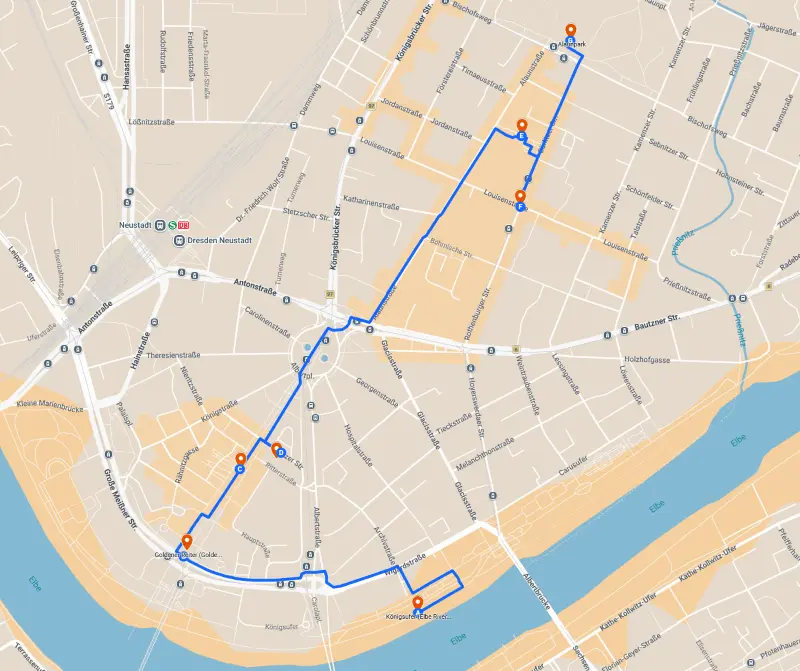
This is the Dresden I’d pick for a slow, happy afternoon — Elbe breezes, Dresden Neustadt energy, hidden courtyards, and “let’s stay for one more” cafés and bars.
I shaped this Dresden walking route to feel effortless and local, with a clean one-way flow and zero backtracking. You start on the Königsufer along the Elbe River for that classic skyline view (the kind that instantly makes you exhale), then drift into Neustadt via the Golden Rider and leafy Hauptstraße, where it’s easy to pause whenever something catches your eye. Markthalle is in here on purpose — it’s your best stop for a quick bite, a pastry, or a small Saxon treat to take along. Kunsthofpassage adds the playful, artsy side of the neighborhood, and Louisenstraße is where you slow down properly: dinner, a craft beer, or a glass of Saxon wine — whatever fits the mood. And then Alaunpark is the soft landing: sit on the grass, people-watch, and let local Dresden feel like it’s yours for a while.
Best Photo Spots in Dresden
Looking for the best photo spots in Dresden? Here are scenic, Instagrammable places with skyline views, easy access, and plenty of baroque charm.
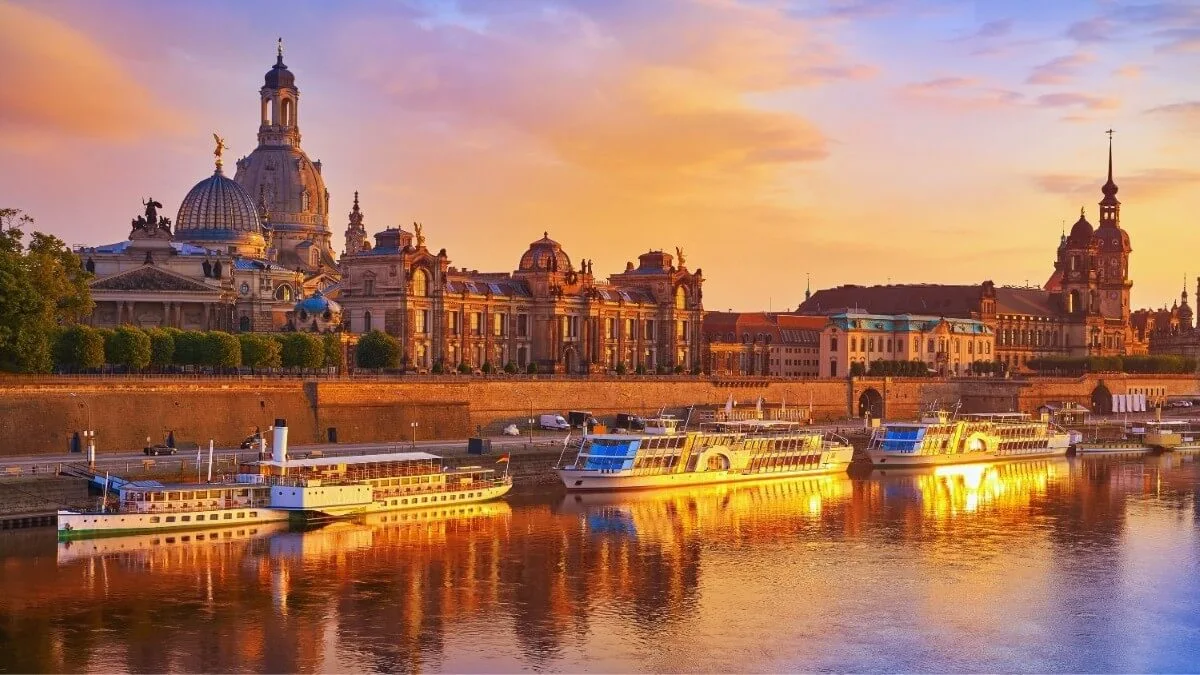
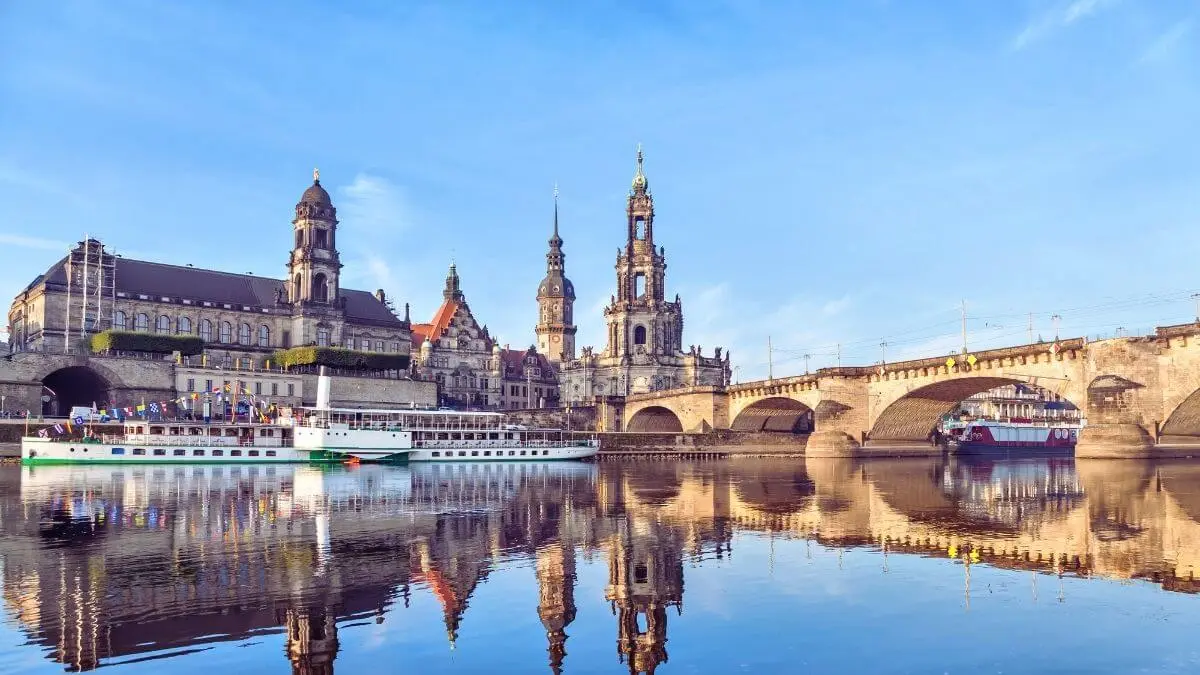
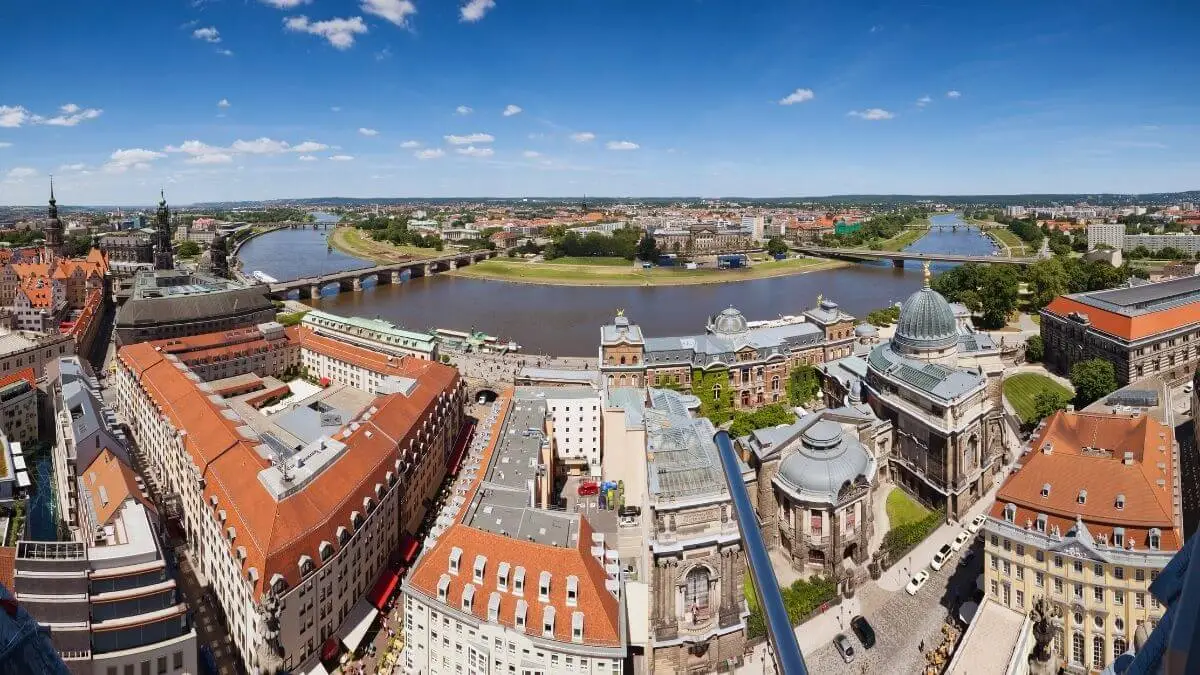
Königsufer Terrassen – Elbe Skyline View
One of the best “skyline across the Elbe” shots toward Dresden’s Altstadt — especially at sunrise or golden hour when the river catches warm reflections.
Augustus Bridge (Augustusbrücke) – Classic Postcard Angle
A timeless Dresden view: the bridge as a leading line with Altstadt landmarks behind it — best in soft morning light or at dusk.
Brühl’s Terrace – “Balcony of Europe” Panorama
Wide views over the Elbe, bridges, and Old Town rooftops — a perfect golden-hour spot with beautiful evening light.
Frauenkirche & Neumarkt – Symmetry & Blue Hour Glow
Neumarkt Square frames the Frauenkirche beautifully — go for symmetrical wide shots from the square, then capture dome details as the lights come on.
Fürstenzug – Long Mural Perspective (Augustusstraße)
A 102-meter porcelain mural made for perspective shots and close-up tile details — one of Dresden’s most photogenic streets in the Old Town.
Theaterplatz – Semperoper & Night Lights
One frame, multiple icons: Semperoper, the equestrian statue, and grand Old Town architecture — stunning at blue hour and after dark.
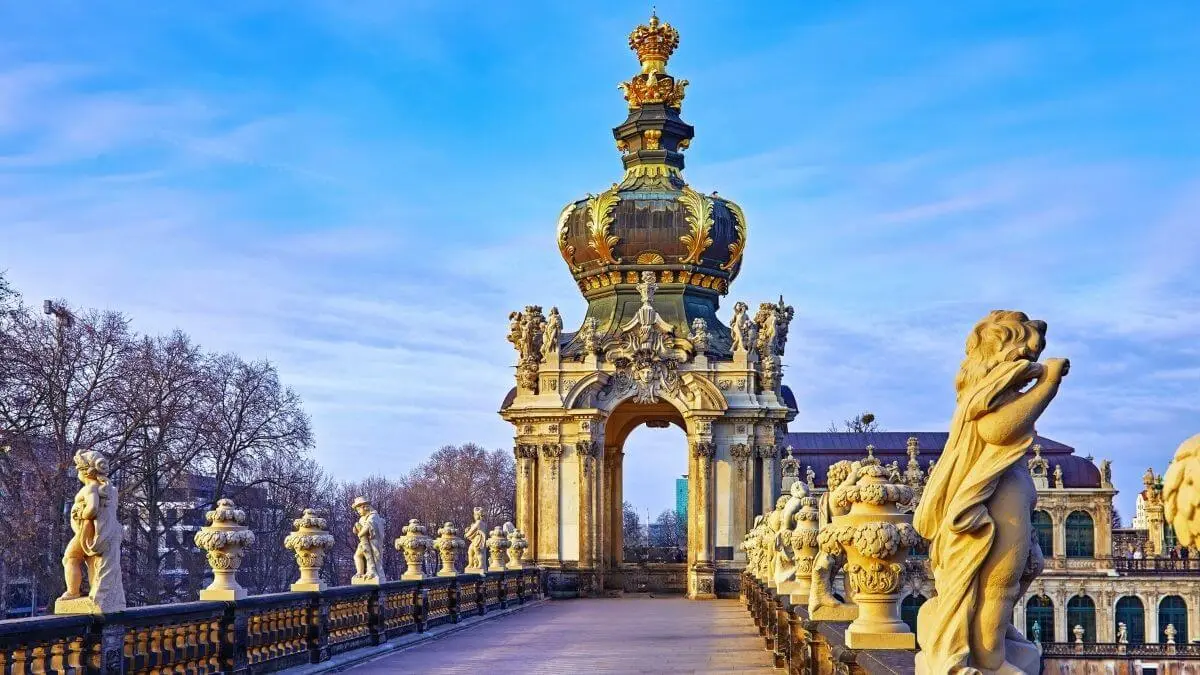
Zwinger Palace – Kronentor Baroque Symmetry
The Kronentor gate with its golden crown is peak Dresden baroque — best photographed early for clean symmetry, statues, and courtyard lines.
Kunsthofpassage – Courtyard of Elements (Neustadt)
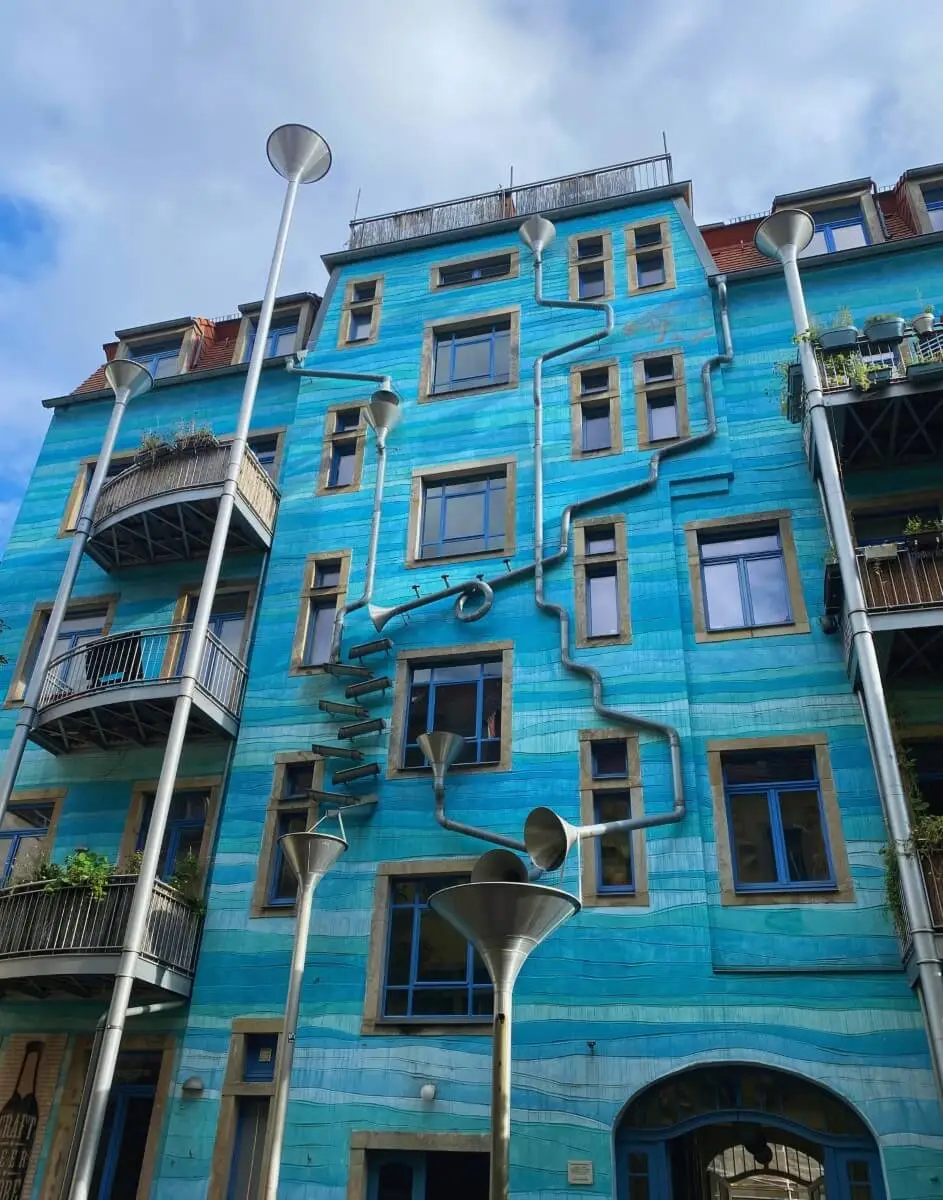
Dresden’s most photogenic “hidden courtyard”: blue façades, quirky details, and the famous funnel wall — extra magic right after rainfall.
Großer Garten – Palais & Lake Reflections
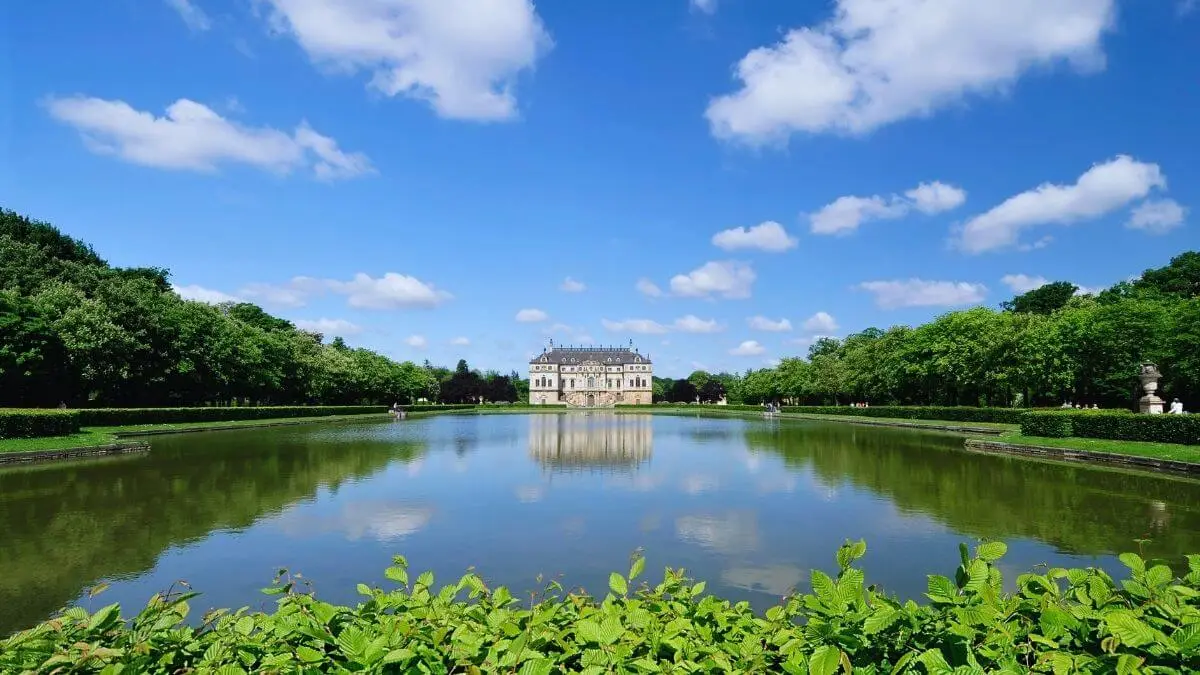
A peaceful green break with wide park views and mirror-like lake reflections near Palais im Großen Garten — perfect for calm, airy shots.
Dresden Art, Culture & Events Scene
Must-See Dresden Museums & Cultural Landmarks
Zwinger Palace & Old Masters Picture Gallery (Gemäldegalerie Alte Meister)
Dresden’s Baroque showpiece — fountains, courtyards, and the famous Old Masters collection (Raphael, Vermeer, Rembrandt). Ticket required; check the official site for current exhibitions and entry options.
Dresden Castle (Residenzschloss) — Green Vault (Grünes Gewölbe)
Royal treasures at their most impressive — the Green Vault is one of Europe’s standout collections. Timed-entry tickets are common, so it’s smart to plan ahead (and if online booking is limited, use official ticket channels or the museum ticket desk).
Albertinum — New Masters Gallery (Galerie Neue Meister)
A top pick for modern art and sculpture — 19th–20th century highlights plus rotating exhibitions in a beautifully updated museum space. Ticketing can vary by exhibition, so check the current program.
Dresden Transport Museum (Verkehrsmuseum Dresden)
A fun, hands-on museum right by Neumarkt — trains, cars, aviation, and the story of mobility in Saxony. Great “break-from-paintings” stop; tickets available on site (and sometimes online).
German Hygiene Museum (Deutsches Hygiene-Museum Dresden)
A uniquely Dresden museum — the human body, society, and big modern questions, curated in a clear, design-forward way. Ticket required; check the official site for current exhibitions.
Military History Museum (Militärhistorisches Museum der Bundeswehr)
Bold architecture and a thoughtful collection on conflict, society, and memory. One of Dresden’s most impactful museums; ticket required.
Dresden Classical Music, Opera & Theatre
Want to hear Dresden, not just see it? Opera, philharmonic concerts, and candlelit church performances—these are the venues worth building your evening around.
Semperoper (Semper Opera House)
One of Europe’s most beautiful opera houses — perfect for opera, ballet, or a guided tour if you want a behind-the-scenes look. Tickets required; booking is easiest via the official site.
Kulturpalast Dresden
A modern cultural hub — home to the Dresden Philharmonic and a top pick for concerts and performances. Tickets depend on the event; check the official program.
Frauenkirche Dresden (Church of Our Lady)
Dresden’s iconic dome and one of its most moving landmarks — visit the interior, catch a concert, or go up for views when available. Concert tickets are available online; entry options vary by activity.
Kreuzkirche Dresden — Concerts & Kreuzchor
A classic Dresden evening: powerful acoustics, organ music, and renowned choir performances in the city’s historic church setting. Many events are free; ticketed concerts are listed in the official calendar.
Staatsschauspiel Dresden
Dresden’s flagship theatre for drama — strong productions, a local favorite for a “real night out,” and a great pick if you want culture without the opera vibe.
Staatsoperette Dresden (Kraftwerk Mitte)
Light, fun, and perfect for a date-night plan — operetta, musicals, and crowd-pleasers in a modern venue at Kraftwerk Mitte. Tickets depend on the show.
Dresden Annual Festivals & Seasonal Events
Timing your Dresden trip for the best moments? From the legendary Striezelmarkt to open-air summer nights on the Elbe, these festivals and seasonal events are when the city feels most alive.
Striezelmarkt (Dresden Christmas Market)
Dresden’s signature winter tradition — one of Germany’s oldest Christmas markets, packed with wooden crafts, Stollen treats, and that cozy “only-in-Dresden” holiday atmosphere. Come for the lights, stay for the local bites and handmade gifts.
🎄 Late November – December
Dresdner Musikfestspiele
Flagship music festival that brings top orchestras, soloists, and special programs to Dresden’s most beautiful halls. A perfect excuse to plan an evening around a concert and feel the city’s classical DNA.
🎻 May – June
Filmnächte am Elbufer
Summer nights done right — open-air cinema and live concerts set along the Elbe with postcard views of the Old Town skyline. Think big screen, fresh air, and one of Dresden’s best warm-weather vibes.
🎬 June – August
Canaletto – Dresdner Stadtfest
Dresden’s big city celebration — multiple stages, street program, food stands, and lively crowds around the historic center. If you want the city at full energy, this is the weekend.
🎉 August
Jazztage Dresden
An autumn favorite for live music lovers — a city-wide jazz program with a mix of big names and exciting discoveries. Great for building your evening around a show when the weather turns crisp.
🎷 October – November
International Dixieland Festival Dresden
A long-running Dresden classic — upbeat jazz, parades, riverboat moments, and a cheerful festival mood across the city. It’s traditional, fun, and surprisingly photogenic.
🎺 May
Dresden Neustadt: Creative Scene & Nightlife
Looking for a different side of Dresden after dark? Murals, hidden courtyards, live music, and laid-back bars come together here, where creativity spills from daytime streets into the night.
Äußere Neustadt (District Highlight)
Dresden’s creative heart — murals, hidden courtyards, independent shops, cafés, and a lively evening scene. This is where the city feels local and lived-in, with Louisenstraße and Alaunstraße setting the rhythm from daytime wandering into late-night hangs.
Kunsthofpassage (Courtyard of Elements)
Neustadt’s most photogenic hidden courtyard — playful architecture, artistic façades, and the famous funnel wall that comes alive when it rains. A must-see slice of Dresden’s creative spirit.
Kraftwerk Mitte
A modern cultural hub in a former power station — theatre, contemporary performances, and evening programs without the classic opera feel. Ideal for a cultured night out or a relaxed date plan.
Jazzclub Tonne
Dresden’s most reliable pick for live music — an intimate jazz club with a long-running reputation and a strong international program. Perfect for building an evening around a concert.
GrooveStation
A key stop for Dresden’s alternative nightlife — DJ nights, live gigs, and electronic sets rooted in the local scene. Casual, unpretentious, and very much part of Neustadt after dark.
Katy’s Garage
A Neustadt classic — alternative bar, relaxed crowd, and regular events that feel more like a community hangout than a tourist stop. Come for a drink, stay longer than planned.
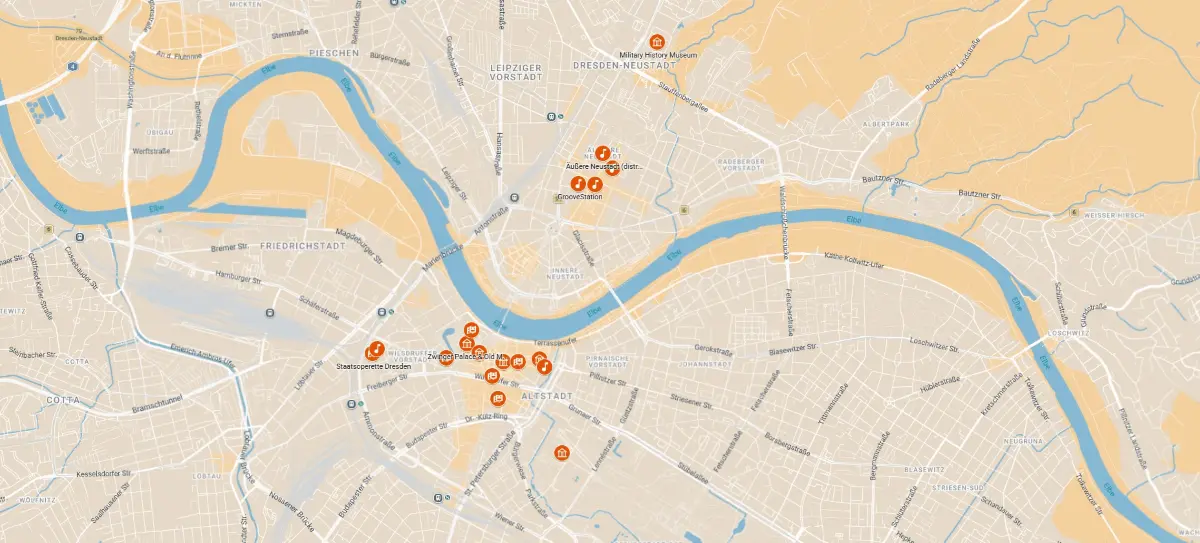
Explore all art, culture & event spots on one map with the Dresden Travel Guide — save it and use it for your trip.
Famous Quotes About Dresden
Curious how people have tried to sum up Dresden in just a few words? These quotes capture the city’s spirit—its beauty, resilience, and creative pulse.

Hans Christian Andersen
“When I reached the Augustus Bridge—so familiar from paintings—it felt as if I’d been here before, in a dream.”
(Hans Christian Andersen, 19th century)

Johann Wolfgang von Goethe
“Dresden gave me great joy and revived my desire to think about art—there’s an incredible treasure of every kind in this beautiful place.”
(Johann Wolfgang von Goethe, late 18th century)
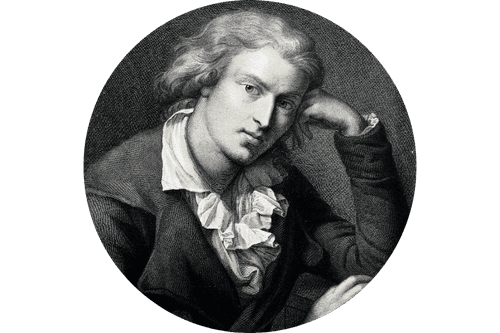
Friedrich Schiller
“What we were to each other in Dresden was a truly real good—too real to let go of the hope of finding it again.”
(Friedrich Schiller, late 18th century)
Dresden Travel Guide: Frequently Asked Questions
Is Dresden walkable?
Yes—Dresden is very walkable, especially in the historic center and along the Elbe. Many key sights are close together, so exploring on foot feels easy and rewarding.
In the Old Town, it’s natural to walk between the Zwinger, Semperoper, Residenzschloss, and the Frauenkirche area around Neumarkt, then continue to Brühl’s Terrace and nearby museums like the Albertinum.
Dresden does spread out beyond the center, though—so for longer distances, most visitors simply hop on a tram or S-Bahn to get around quickly and comfortably.
How to get around Dresden?
Getting around Dresden is easy thanks to the city’s reliable public transport. Trams are the backbone for most routes, and the S-Bahn is great for covering longer distances quickly—so you usually won’t need a car.
For flexible, unlimited rides, look into a day ticket (or a small-group option if you’re traveling together). If you’re doing lots of rides in one day, it’s usually the simplest, best value option.
In the central areas, walking is often the best option, and cycling along the Elbe is a nice way to connect neighborhoods. Taxis and ride-hailing exist, but most visitors stick with public transport for convenience.
For something uniquely Dresden, ride the hillside railways in Loschwitz (the Schwebebahn or Standseilbahn) for great views, or take a classic paddle steamer cruise on the Elbe for a different perspective of the city.
When is the best time to visit Dresden?
The best time to visit Dresden depends on the kind of experience you’re looking for:
Spring (April–May): A fresh, easygoing season for city walks and river views, with comfortable temperatures around 10–18°C. It’s a great time for museums, cafés, and exploring the Old Town without peak-season crowds.
Summer (June–August): Warm, lively days (often 20–28°C) and long evenings make it ideal for outdoor terraces, Elbe river strolls, and day trips nearby. This is also the busiest season, so popular sights can feel more crowded.
Autumn (September–October): Cooler weather (roughly 10–17°C) and golden light are perfect for scenic walks and a calmer city vibe. It’s often the best balance of atmosphere and fewer tourists.
Winter (November–February): Dresden shines for festive-season charm—especially its famous Christmas markets—plus cozy indoor culture (museums, concerts, and cafés). Expect colder temperatures (around -2–5°C) and shorter days, but a very memorable atmosphere.
How many days should I spend in Dresden?
Most travelers find that 2–3 days in Dresden is ideal for the essentials—seeing the Old Town highlights, visiting a couple of major museums, and enjoying the riverside atmosphere along the Elbe.
With 4–5 days, you can slow down and explore beyond the core sights—spend more time in Neustadt’s creative scene, add a concert or performance night, and take easy day trips to nearby places like Saxon Switzerland or Meissen.
If you have 6+ days, Dresden becomes a great base for deeper regional exploration—castle routes, wine country, and smaller historic towns—while still keeping evenings in the city relaxed and culture-filled.
What are the must-see Dresden attractions?
The must-see Dresden attractions start with the Zwinger (one of the city’s Baroque showpieces) and the stunning Semperoper. Don’t miss the rebuilt Frauenkirche at Neumarkt, and step inside Dresden Castle (Residenzschloss) if you want royal history and world-famous treasures like the Green Vault.
For classic Old Town atmosphere, walk along Brühl’s Terrace, cross the Augustus Bridge for postcard views, and make time for the Fürstenzug (Procession of Princes), one of Dresden’s most iconic artworks. Nearby museums like the Albertinum are great if you want to add a strong art stop without overplanning.
To round out your experience, spend an evening in Neustadt for the city’s creative side—murals, courtyards, cafés, and a laid-back nightlife scene (the Kunsthofpassage is a favorite for a quick stop).
Is Dresden safe for tourists?
Yes—Dresden is generally safe for tourists, and most visitors have a smooth, trouble-free trip. Violent crime is uncommon, and the main sightseeing areas are usually comfortable to explore, even in the evening.
The most common issue to watch for is petty theft/pickpocketing in busy places—around major transport hubs, crowded streets, and on public transport. Keep your phone and wallet secure, and don’t leave bags unattended.
If you’re out late (especially around nightlife areas), stick to well-lit streets, keep an eye on your belongings, and use basic big-city awareness. With a bit of caution, you can enjoy Dresden with confidence.
Where to stay in Dresden — what are the best neighborhoods?
Where to stay in Dresden depends on the kind of trip you’re planning—Dresden is compact, so several areas work well for visitors.
For first-time visitors: Stay in (or near) the Old Town (Altstadt) for the easiest sightseeing. You’ll be close to the main landmarks, museums, and classic river views, with plenty of cafés and restaurants nearby.
For a creative, lively vibe: Choose Neustadt (especially Äußere Neustadt) for street art, independent shops, great cafés, and a strong bar scene. It’s perfect if you want evenings that feel local and a bit more energetic.
For a quieter, local feel: Look at areas like Blasewitz, Striesen, or Loschwitz—leafier streets, a calmer pace, and easy access back to the center. Wherever you stay, you can still reach the main sights quickly by tram.
What can I do in Dresden on a rainy day?
Rainy days in Dresden are still a great time to explore—this is a city made for museums, palaces, and cozy café breaks.
Start with major indoor highlights like the Zwinger complex, Dresden Castle (Residenzschloss) and the Green Vault, or the Albertinum for modern art. If you want something different, the German Hygiene Museum is a surprisingly fascinating stop.
For a slower, cozy plan, duck into a café for coffee and cake, or book an evening concert—Dresden’s music scene is perfect when the weather turns gray.
If you’re traveling with kids (or just want something hands-on), the Dresden Transport Museum is an easy, fun indoor option right in the center.
What are the best free things to do in Dresden?
Dresden has plenty of great free things to do—especially if you love scenery, architecture, and scenic walks.
- Brühl’s Terrace: One of the best free viewpoints in the city, perfect for an easy riverside stroll.
- Augustus Bridge: Cross at sunset for classic skyline views and beautiful photo angles.
- Neumarkt & Frauenkirche Square: Soak up the heart of the Old Town—one of Dresden’s most iconic areas to wander.
- Fürstenzug (Procession of Princes): A famous outdoor artwork you can admire any time, right in the center.
- Großer Garten: Dresden’s big green escape—great for walking, picnics, and a quiet break from sightseeing.
- Markets & seasonal events: Look out for open-air markets and free festivals throughout the year, especially in summer and during the Christmas season.
What day trips can I take from Dresden?
Dresden is a great base for day trips—within a short train ride you can reach dramatic nature, fairy-tale castles, and some of Saxony’s most charming historic towns.
- Saxon Switzerland (Sächsische Schweiz): The classic nature day trip—hiking, viewpoints, and iconic spots like the Bastei area.
- Königstein Fortress: A massive hilltop fortress with sweeping views over the Elbe valley—easy to combine with Saxon Switzerland.
- Meissen: A lovely small city with a beautiful old town, riverside walks, and the world-famous porcelain tradition.
- Moritzburg Castle: A picture-perfect palace setting, especially nice if you want a relaxed, scenic outing.
- Pillnitz Palace & Park: An easy, elegant trip from the city—great for gardens, riverside scenery, and a slower pace.
- Görlitz: One of Germany’s prettiest old towns (and a frequent film location), perfect if you love architecture and atmosphere.
If you want something a bit bigger, Leipzig also works well as a day trip for museums, cafés, and a lively city vibe—just plan for a fuller day.
Is Dresden expensive to visit?
Dresden is generally more affordable than many major European capitals, though costs still depend on your travel style. You can keep expenses low with good-value public transport, plenty of walkable sightseeing, and plenty of free landmarks and viewpoints.
Many highlights—like Brühl’s Terrace, the Augustus Bridge views, and the Old Town squares—cost nothing, while museums and palace collections usually have moderate entry fees compared to bigger capitals.
Food is easy to budget for: you’ll find everything from bakeries and casual local spots to nicer restaurants, so you can spend as little or as much as you like.
Accommodation is typically the biggest variable. Staying in or near the Old Town is convenient but can cost more, while areas like Neustadt, Striesen, or Plauen often offer better value and still keep you well connected.
Is Dresden good for families with kids?
Yes—Dresden is a great city for families. It’s easy to get around, the center is manageable, and there are plenty of kid-friendly stops that don’t feel stressful or overplanned.
For classic family favorites, the Dresden Zoo is a solid pick, and the Großer Garten is perfect for letting kids run around, have a picnic, and reset between sightseeing stops. In warmer months, easy riverside time along the Elbe is also an easy win.
If you want something indoors, Dresden has great hands-on options like the Dresden Transport Museum and the Technische Sammlungen Dresden (interactive, curiosity-friendly, and great on a rainy day).
For a “wow” factor that works for different ages, the Panometer Dresden is a fun, memorable experience—big visuals, easy to enjoy, and not too long or tiring.
When do the Christmas markets in Dresden take place?
Dresden’s Christmas markets typically open in late November and run through Christmas Eve (December 24). A few of the larger markets continue into early January, so you can still catch the festive atmosphere after Christmas.
- Striezelmarkt (Altmarkt): Usually late November to December 24 (e.g., 25 Nov–24 Dec 2026 for the 591st edition).
- Stallhof Medieval Christmas Market: Often runs beyond Christmas into early January (e.g., 26 Nov 2025–6 Jan 2026).
- Advent on the Neumarkt: Commonly continues into early January (e.g., 26 Nov 2025–4 Jan 2026).
Tip: Hours are often reduced on December 24, and many markets pause or close on December 25–26. If you’re traveling on specific dates, it’s worth checking that season’s official listings.
What was rebuilt in Dresden after World War II—and what’s original today?
After World War II, large parts of Dresden’s historic center had to be rebuilt or restored. Over the decades, the city brought back major landmarks and entire squares—especially around the Old Town.
Some of the most recognizable “rebuilt” highlights include the Frauenkirche (reconstructed and reopened in the 2000s), the Semperoper (rebuilt after severe damage), and large parts of the Neumarkt area, where many historic façades and buildings were reconstructed to recreate the old cityscape. Key palace areas like Dresden Castle (Residenzschloss) were also extensively reconstructed and restored over time.
At the same time, you’ll see places that survived in part and were heavily restored—like the Zwinger—as well as historic elements that were repaired rather than “rebuilt from scratch.” That’s why Dresden can feel both historic and surprisingly “new” side by side—a city shaped by loss, restoration, and renewal.
Why is Dresden famous for porcelain?
Dresden is closely linked to the rise of Meissen porcelain, the first successful “hard-paste” porcelain produced in Europe in the early 1700s.
Under Augustus the Strong, porcelain became a symbol of prestige at the Saxon court. Dresden didn’t just use it—it collected, commissioned, and showcased porcelain as high art, helping turn it into one of the region’s most famous cultural hallmarks.
That legacy still lives on in Dresden today, especially in the city’s museum collections—where porcelain is treated not as simple tableware, but as craftsmanship, design, and royal-era showpieces with real artistic value.
Dresden Travel Tips & Insights
What’s the best way to see Dresden’s highlights quickly?
Walking is the best way to see Dresden’s central highlights quickly—many top sights in the Old Town sit close together, so it’s easy to cover a lot in a short time.
A simple route is to walk between the Zwinger, Semperoper, Frauenkirche/Neumarkt, and Brühl’s Terrace, then cross the Augustus Bridge for a classic skyline view.
To see more in less time, combine walking with a quick tram hop—especially if you want to add Neustadt for cafés, courtyards, and a more local vibe. For ready-made routes, see our Dresden itinerary picks. This mix is the most efficient way to fit Dresden’s essentials into a day or two.
Does Dresden have public transport at night?
Yes—Dresden does have public transport at night, but it runs on a reduced night network rather than full daytime service.
In the city, night service is centered on Postplatz, where key night lines meet so you can transfer more easily. Service is typically less frequent after midnight, so it’s smart to check the schedule if you’re heading farther out.
Many trams run late, while some bus routes don’t operate very late at night. On a few corridors, an on-call taxi service can replace regular buses or trams when demand is very low—so you can still get around even late.
Which hidden spots are worth seeking out in Dresden?
- Kunsthofpassage (Neustadt): A set of hidden courtyards filled with playful design details and artistic façades—quick to visit and very much part of Dresden’s creative scene.
- Pfunds Molkerei: A beautifully decorated dairy shop that feels like stepping into another era—small, unique, and easy to combine with a Neustadt wander.
- Yenidze: A former cigarette factory building with an unexpected “oriental” dome—one of Dresden’s most unusual pieces of architecture, and a fun photo stop.
- Lingnerterrassen: A scenic terrace viewpoint that’s less touristy than the main Old Town spots—great for a calm pause with views over the Elbe.
- Loschwitz corners (Körnerplatz area): A charming, village-like pocket of Dresden with a relaxed local feel—perfect if you want a quieter, more “lived-in” side of the city.
Does Dresden really have a live music scene beyond classical concerts?
Yes—Dresden is famous for classical music and opera, but the live scene goes well beyond that. Alongside grand venues like the Semperoper and the Kulturpalast, you’ll find a steady stream of jazz, indie, rock, and alternative shows.
For jazz, Jazzclub Tonne is a long-running favorite. If you want a more local, alternative vibe, head to Neustadt, where venues like GrooveStation regularly host live gigs across different genres. For larger club-style gigs, Beatpol is another strong pick for touring acts.
Tip: If you’re visiting on a Friday or Saturday, it’s worth checking what’s on during your dates—popular shows can sell out, even in smaller venues.
Where can I find the best street art in Dresden?
Dresden doesn’t have a single “main” street art landmark like Berlin—but you can still find a strong urban art scene if you know where to look.
Your best bet is Neustadt, especially Äußere Neustadt, where murals, stickers, and graffiti show up on façades, courtyards, and side streets. Start around the Louisenstraße and Alaunstraße area, then wander through the nearby side streets—this is where the city feels most creative and lived-in.
For a different vibe, explore Hechtviertel, which often has more low-key, local street art tucked into residential corners. And if you want something more “curated,” Kunsthofpassage isn’t street art in the strict sense, but it’s one of the city’s most fun artistic courtyard stops.
Tip: The best finds are usually off the main streets—take a slow walk, peek into courtyards when they’re open, and enjoy it respectfully (some pieces are on residential buildings).
Does Dresden have a theatre and comedy scene beyond opera?
Yes—Dresden has a lively performing arts scene that goes well beyond opera and classical concerts. Alongside the city’s major venues, you’ll find strong theatre, operetta and musicals, and plenty of options for a fun night out.
For drama and major productions, Staatsschauspiel Dresden is the city’s flagship theatre. If you’re in the mood for lighter evening entertainment, Staatsoperette Dresden (at Kraftwerk Mitte) is a great pick for operetta and musical-style shows.
And if you want laughs, Dresden has dedicated comedy venues like Comödie Dresden—plus a long local tradition of satirical stage comedy (German-style “Kabarett”), which adds a distinctly Dresden flavor after dark.
Where can I experience a real Dresden evening beyond the tourist center?
For a real Dresden evening beyond the Old Town, head to Neustadt—especially Äußere Neustadt. This is where the city feels local and lived-in after dark, with casual bars, small venues, late-night spots, and streets that stay lively without feeling overly touristy.
A simple plan is to start with a relaxed dinner or drinks around Louisenstraße and Alaunstraße, then wander through courtyards and side streets to see what’s happening. If you want live music, spots like Jazzclub Tonne are a reliable choice, and venues around Neustadt often have gigs or DJ nights depending on the day.
For something calmer, take an evening walk along the Elbe—the riverfront is especially beautiful at dusk. And if you want a cultured night out without the opera vibe, see what’s on at Kraftwerk Mitte for performances in a modern setting.
Where can I try typical Dresden & Saxon food?
To try typical Dresden & Saxon food, start with the classics you’ll actually see on local menus: Sauerbraten (marinated pot roast), Quarkkeulchen (pan-fried potato-and-quark cakes), and Eierschecke (a beloved Saxon layered cake).
The easiest way to sample these is to look for a traditional Saxon restaurant (often labeled “Sächsische Küche”) or a cozy Gaststätte—you’ll find plenty of options in and around the Old Town, and also in Neustadt if you want a more local evening vibe.
For something quick and everyday, pop into a bakery for Eierschecke or other regional pastries, and don’t be shy about asking what’s “typisch sächsisch” that day—locals are usually happy to point you to a good comfort-food choice.
What are the best markets in Dresden?
Dresden has a great mix of weekly produce markets, flea markets, and seasonal favorites—so the best one depends on what you’re in the mood for.
- Weekly markets (Wochenmärkte): For fresh produce, local cheese, flowers, and an everyday Dresden vibe, check the city’s official market calendar—popular options include the Alaunplatz market in Neustadt, plus other neighborhood markets throughout the week.
- Flea market: If you love browsing second-hand finds with river views, the Elbeflohmarkt is Dresden’s classic open-air flea market (seasonal, often on weekends).
- Seasonal markets: In winter, the main highlight is the Dresdner Striezelmarkt at Altmarkt. For something different, the Medieval Christmas Market at the Stallhof is a favorite for its atmosphere.
Tip: If you want a market that feels truly “local,” choose a weekly neighborhood market. If you want the iconic Dresden experience, go for the seasonal Christmas markets.
Where can I get the best skyline views in Dresden, especially at sunset?
For the best Dresden skyline views at sunset, stick close to the Elbe—the river is where the city’s silhouettes and golden light really come together.
- Augustus Bridge: The classic postcard view—especially looking back toward the Old Town as the light warms the domes and towers.
- Brühl’s Terrace: An easy, central viewpoint with a beautiful “above-the-river” perspective—great during golden hour.
- Canaletto View (Neustadt riverbank): One of the most famous skyline angles—best from the Neustadt side looking across to the Old Town.
- Lingnerterrassen: A calmer, slightly less touristy terrace with lovely views over the Elbe—nice for a slower sunset pause.
- Loschwitz / Körnerplatz area: A scenic riverside pocket with a more local feel—great if you want a quieter, romantic evening view away from the busiest center spots.
Tip: Aim for 30–45 minutes before sunset so you catch the full golden-hour glow and the shift into early evening—Dresden looks incredible as the lights start to come on.
What seasonal events make Dresden special?
Dresden feels special year-round, but a few seasonal highlights really stand out—especially if you love music, open-air culture, and festive traditions.
- Winter: The city’s Christmas market season is the main highlight—especially the historic Striezelmarkt in the Old Town, plus smaller themed markets around the center (see the FAQ for exact dates).
- Spring: Dresden leans into its music-city identity with major classical programming during the Dresdner Musikfestspiele (usually in late spring/early summer). The city also hosts the long-running International Dixieland Festival, often in May.
- Early summer: The Dresden Night of Museums is a great one-night highlight—many museums stay open late with special programs and a citywide buzz.
- Summer: For warm evenings, Filmnächte am Elbufer combines open-air cinema and concerts right on the riverbank with a stunning skyline backdrop. Late summer also brings big city-festival energy with CANALETTO – Dresdner Stadtfest.
Tip: Dates and programs change each year, so it’s worth checking the official Dresden event listings before your trip—and using this Dresden Travel Guide to plan the best spots and neighborhoods around what’s on.
Where can I slow down and relax outdoors in Dresden?
Dresden is perfect for slowing down outdoors—between the Elbe, big parks, and quiet green corners, you can find calm without leaving the city.
- Elbe riverbanks & meadows (Elbwiesen): The easiest “slow” option—walk, sit by the water, or catch golden hour views with the skyline nearby.
- Großer Garten: Dresden’s classic big park for long walks, picnics, and a reset between sightseeing stops.
- Brühl’s Terrace: A beautiful, central spot for a short scenic pause above the river—great if you want outdoors without going far.
- Dresdner Heide: A large forested area for quieter nature time, easy trails, and a break from city streets.
- Loschwitz riverside corners: A calmer, more local-feeling pocket by the Elbe—nice for a slower stroll away from the busiest center spots.
Tip: If the weather’s nice, pair a riverside walk with a café stop—or bring something simple for a picnic and let the city’s pace slow down on its own.